Birdr

Tufted Duck vs Greater Scaup

Aythya fuligula versus Aythya marila

Play a quiz with Tufted Duck and Greater Scaup
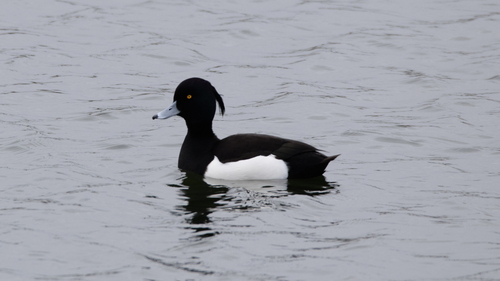
Tufted Duck (Aythya fuligula) Tufted Duck
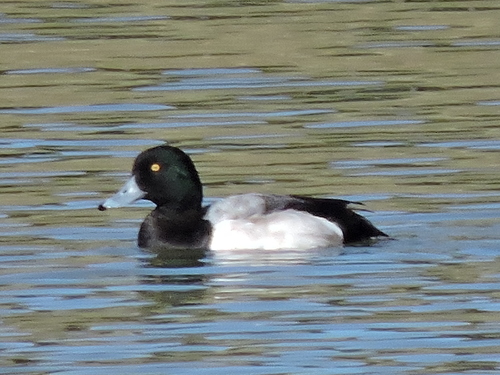
Greater Scaup (Aythya marila) Greater Scaup

Media

Loading…

In short

The Tufted Duck and Greater Scaup can be challenging to differentiate, but key features include the Tufted Duck's distinctive head tuft and the Greater Scaup's rounder head shape. Both species are diving ducks and share similar habitats, but careful observation of head shape and plumage can aid in identification.

Identification tips

  1. Look for the Tufted Duck's distinctive head tuft, especially in males. 2. Observe the head shape: the Greater Scaup has a rounder head compared to the more angular head of the Tufted Duck. 3. Note the habitat: Greater Scaup are often found in larger bodies of water. 4. In mixed flocks, pay attention to the overall silhouette and head profile for accurate identification.

Size

Both species are similar in size, but the Greater Scaup is slightly bulkier with a broader body.

Plumage

The male Tufted Duck has a striking black head with a long, drooping tuft, while the Greater Scaup has a rounder head with a greenish sheen. Females of both species are brown, but the Tufted Duck female has a more noticeable tuft.

Behaviour

Both species are diving ducks and exhibit similar feeding behaviors, often seen diving for food in open water.

Habitat

Both species inhabit similar environments, such as lakes, reservoirs, and coastal waters, but the Greater Scaup is more likely to be found in larger bodies of water.

Voice

Vocalizations are not a reliable distinguishing feature between these species in the field.

Submit a better description

Use the same sections as the comparison. Your text is published immediately.

The Tufted Duck and Greater Scaup can be challenging to differentiate, but key features include the Tufted Duck's distinctive head tuft and the Greater Scaup's rounder head shape. Both species are diving ducks and share similar habitats, but careful observation of head shape and plumage can aid in identification.

  1. Look for the Tufted Duck's distinctive head tuft, especially in males. 2. Observe the head shape: the Greater Scaup has a rounder head compared to the more angular head of the Tufted Duck. 3. Note the habitat: Greater Scaup are often found in larger bodies of water. 4. In mixed flocks, pay attention to the overall silhouette and head profile for accurate identification.

Both species are similar in size, but the Greater Scaup is slightly bulkier with a broader body.

The male Tufted Duck has a striking black head with a long, drooping tuft, while the Greater Scaup has a rounder head with a greenish sheen. Females of both species are brown, but the Tufted Duck female has a more noticeable tuft.

Both species are diving ducks and exhibit similar feeding behaviors, often seen diving for food in open water.

Both species inhabit similar environments, such as lakes, reservoirs, and coastal waters, but the Greater Scaup is more likely to be found in larger bodies of water.

Vocalizations are not a reliable distinguishing feature between these species in the field.

Discard your changes?

You have unsaved edits. If you leave now, those changes will be lost.

Tufted Duck · Greater Scaup · My Tricky Birds