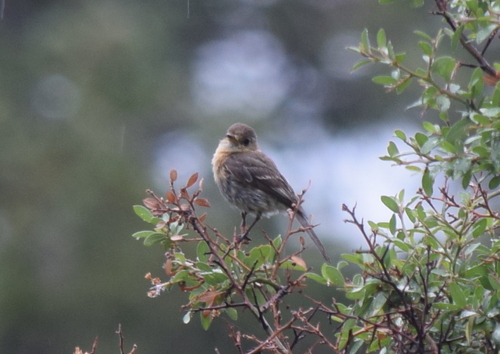
Tufted Flycatcher vs Buff-breasted Flycatcher
Mitrephanes phaeocercus versus Empidonax fulvifrons
Play a quiz with Tufted Flycatcher and Buff-breasted Flycatcher
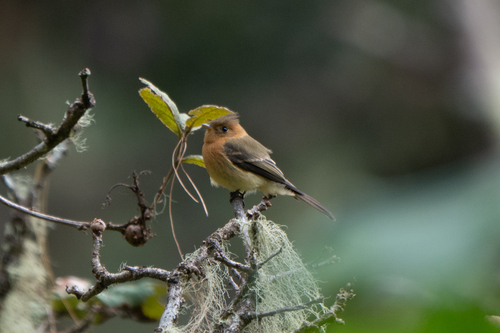
Tufted Flycatcher
Buff-breasted Flycatcher
In short
The Tufted Flycatcher and Buff-breasted Flycatcher can be distinguished by their head crests and plumage coloration. The Tufted Flycatcher has a distinct tuft on its head and a more vibrant orange-brown coloration, while the Buff-breasted Flycatcher lacks a tuft and is paler with a buffy breast.
Identification tips
- Look for the head tuft on the Tufted Flycatcher, absent in the Buff-breasted Flycatcher.
- Note the orange-brown coloration of the Tufted Flycatcher compared to the paler, buffy breast of the Buff-breasted Flycatcher.
- Observe the habitat: Tufted Flycatchers are in higher elevation forests, while Buff-breasted Flycatchers prefer open woodlands.
- Be aware of regional variations, as both species have subspecies with slight differences.
Size
Both species are small flycatchers, but the Tufted Flycatcher may appear slightly bulkier due to its tufted head.
Plumage
The Tufted Flycatcher features a prominent head tuft and a rich orange-brown plumage, especially on the underparts. In contrast, the Buff-breasted Flycatcher is paler overall, with a buffy wash on the breast and no head tuft.
Behaviour
Both species exhibit typical flycatcher behavior, perching upright and making sallying flights to catch insects. The Tufted Flycatcher is known for its conspicuous perching on exposed branches.
Habitat
The Tufted Flycatcher is found in montane forests, including pine woodlands, up to 3500 m. The Buff-breasted Flycatcher prefers open pine-oak woodlands and montane riparian forests, often at lower elevations.
Voice
Vocalizations are not well-documented in the sources, but both species likely have typical flycatcher calls. Specific differences are not noted.
Tufted Flycatcher · Buff-breasted Flycatcher · My Tricky Birds