Birdr

Turkestan Short-toed Lark vs Eurasian Skylark

Alaudala heinei versus Alauda arvensis

Play a quiz with Turkestan Short-toed Lark and Eurasian Skylark
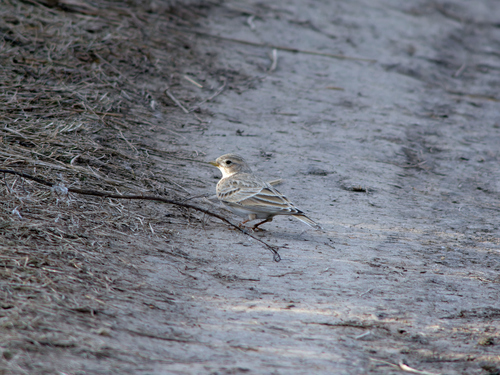
Turkestan Short-toed Lark (Alaudala heinei) Turkestan Short-toed Lark
Eurasian Skylark (Alauda arvensis) Eurasian Skylark

Media

Loading…

In short

The Turkestan Short-toed Lark and Eurasian Skylark can be distinguished by their structure and habitat preferences. The Turkestan Short-toed Lark is smaller with a shorter tail and bill, while the Eurasian Skylark is larger and more robust. Both species have similar plumage tones, but the Eurasian Skylark often shows a more prominent crest.

Identification tips

  1. Size and Structure: Look for the smaller size and shorter tail of the Turkestan Short-toed Lark compared to the larger Eurasian Skylark. 2. Crest: Check for a more prominent crest on the Eurasian Skylark. 3. Behavior: Observe for the Eurasian Skylark's characteristic display flight and song. 4. Habitat: Note the habitat; Turkestan Short-toed Lark is often on saline soils, while Eurasian Skylark is more common in agricultural fields.

Size

The Turkestan Short-toed Lark is smaller and more compact, whereas the Eurasian Skylark is larger and more robust.

Plumage

Both species have similar brownish tones, but the Eurasian Skylark may display a more noticeable crest on its head.

Behaviour

The Eurasian Skylark is known for its display flights and singing while in the air, a behavior less commonly observed in the Turkestan Short-toed Lark.

Habitat

Turkestan Short-toed Lark prefers open, often saline soils, while Eurasian Skylark is more adaptable but often found in agricultural fields and grasslands.

Voice

The Eurasian Skylark is famous for its continuous and melodious song delivered in flight, which is a key difference from the Turkestan Short-toed Lark's less conspicuous vocalizations.

Submit a better description

Use the same sections as the comparison. Your text is published immediately.

The Turkestan Short-toed Lark and Eurasian Skylark can be distinguished by their structure and habitat preferences. The Turkestan Short-toed Lark is smaller with a shorter tail and bill, while the Eurasian Skylark is larger and more robust. Both species have similar plumage tones, but the Eurasian Skylark often shows a more prominent crest.

  1. Size and Structure: Look for the smaller size and shorter tail of the Turkestan Short-toed Lark compared to the larger Eurasian Skylark. 2. Crest: Check for a more prominent crest on the Eurasian Skylark. 3. Behavior: Observe for the Eurasian Skylark's characteristic display flight and song. 4. Habitat: Note the habitat; Turkestan Short-toed Lark is often on saline soils, while Eurasian Skylark is more common in agricultural fields.

The Turkestan Short-toed Lark is smaller and more compact, whereas the Eurasian Skylark is larger and more robust.

Both species have similar brownish tones, but the Eurasian Skylark may display a more noticeable crest on its head.

The Eurasian Skylark is known for its display flights and singing while in the air, a behavior less commonly observed in the Turkestan Short-toed Lark.

Turkestan Short-toed Lark prefers open, often saline soils, while Eurasian Skylark is more adaptable but often found in agricultural fields and grasslands.

The Eurasian Skylark is famous for its continuous and melodious song delivered in flight, which is a key difference from the Turkestan Short-toed Lark's less conspicuous vocalizations.

Discard your changes?

You have unsaved edits. If you leave now, those changes will be lost.

Turkestan Short-toed Lark · Eurasian Skylark · My Tricky Birds