
Turkestan Shrike vs Brown Shrike
Lanius phoenicuroides versus Lanius cristatus
Play a quiz with Turkestan Shrike and Brown Shrike
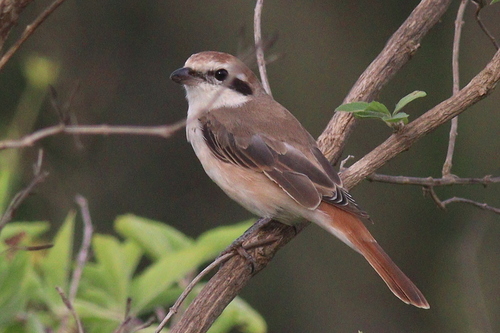 Turkestan Shrike
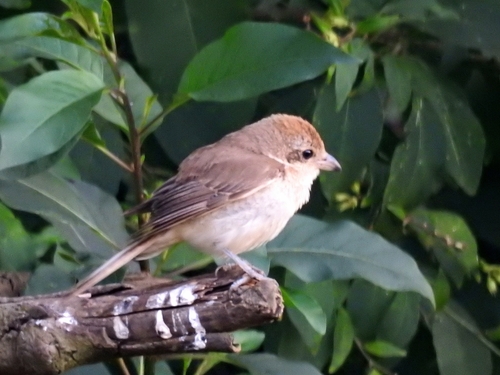 Brown Shrike
In short
The most reliable field mark between Turkestan Shrike and Brown Shrike is the color and tone of the tail: Turkestan Shrike shows a distinctly rufous or reddish tail, while Brown Shrike’s tail is more brownish, sometimes with a faint rufous tinge but never as bright. Both species can be confusing in immature plumages and share similar habits, but careful attention to tail color, head pattern, and upperpart tones can separate them. Sex and age can complicate identification, especially as both species have variable masks and subtle differences in supercilium and crown color. Structural differences are subtle, so focus on plumage contrasts, especially in perched birds.
Identification tips
- Tail color is the most consistent separator: Turkestan Shrike always shows a distinctly rufous or reddish tail, while Brown Shrike’s tail is brownish, sometimes with a dull rufous wash but never as bright. This works for all ages and sexes.
- Supercilium and head pattern: Brown Shrike (especially subspecies superciliosus) can show a broad white supercilium and a reddish or greyish crown, while Turkestan Shrike has a less prominent supercilium and a more uniform head pattern. Juvenile Brown Shrikes lack the grey crown.
- Mask strength: Male Brown Shrikes have a strong black mask, but in females and immatures it is dark brown and less well marked. Turkestan Shrike’s mask is generally less bold than in male Brown Shrike, but this is variable and not always reliable.
- Underpart scalloping: Female and immature Brown Shrikes may show fine scalloping below, but this is subtle and not always visible in the field. Turkestan Shrike is generally plainer below.
- Rump color: Brown Shrike’s rump can be slightly more rufous than the rest of the upper back, but Turkestan Shrike’s rufous is more extensive and brighter, blending into the tail.
- Wing pattern: Neither species shows a white wing patch ("mirror"), so this is not useful for separation.
- Upperpart tone: Brown Shrike is mainly brown above, while Turkestan Shrike can appear slightly warmer or more rufous-toned, especially on the tail and rump.
- Sex and age pitfalls: Both species show variation by sex and age, with females and immatures duller and less well marked. Mask and supercilium differences are less reliable in these cases, so rely on tail color.
- Flight views: In flight, focus on the tail color and contrast with the rump. Brown Shrike’s tail is never as bright as Turkestan Shrike’s.
- Habitat overlap: Both species can occur in similar habitats, especially outside the breeding season, so do not use habitat alone for identification.
- Voice: Brown Shrike may give chattering or rattling calls, but vocalizations are not a reliable separator in the field.
- Structural features: No consistent difference in bill shape, wing formula, or primary projection is noted in the available sources.
- Seasonal context: Brown Shrike is more likely in winter in South and Southeast Asia, while Turkestan Shrike is more likely in Central Asia during the breeding season. However, vagrancy and overlap do occur.
- Subspecies confusion: Some Brown Shrike subspecies (especially in central Asia) can overlap in appearance with Turkestan Shrike, so always prioritize tail color and overall tone over fine head pattern details.
- When in doubt: If the tail is not clearly visible or the bird is in heavy moult, identification may not be possible to species level in the field.
Size
Both species are medium-sized shrikes and are very similar in size, with Brown Shrike averaging about 33 grams in body mass. No reliable size or structural difference is noted in the available sources, so size is not a useful field mark for separation.
Plumage
Juvenile and first-winter birds of both species can be tricky, but the tail color remains a key distinction: Turkestan Shrike (all ages) shows a more vivid rufous or reddish tail, while Brown Shrike’s tail is brownish, sometimes with a dull rufous wash but never as bright. In Brown Shrike, the upperparts are mainly brown, and the mask is black in males but can be paler or dark brown in females and immatures. Brown Shrike often shows a white supercilium (especially in subspecies superciliosus), and the crown can be greyish (lucionensis) or reddish (superciliosus), but juveniles lack the grey. Turkestan Shrike has a less prominent supercilium and a more uniform head pattern. Both species lack a white wing patch ("mirror"), and both can show some rufous on the rump, but Turkestan Shrike’s is more extensive and brighter. Female and immature Brown Shrikes may show fine scalloping below, but this is subtle and not always reliable in the field.
Behaviour
Both species hunt from prominent perches, impale prey on thorns, and have similar predatory habits, including taking insects, small birds, and lizards. There is no significant behavioral difference in the field that reliably separates them.
Habitat
Turkestan Shrike breeds in open cultivated country with thorn bushes in south Siberia and Central Asia, while Brown Shrike breeds in northern Asia (Mongolia to Siberia) and winters widely in South and Southeast Asia. Both prefer open areas with scattered bushes or trees, so habitat is not a strong separator except at the extremes of their breeding ranges.
Voice
Brown Shrike gives loud chattering or rattling calls, especially on wintering grounds, and its song is faint, sometimes mimicking other birds. There is no distinctive vocal mark in the notes for Turkestan Shrike, and both species are generally quiet and not easily separated by voice in the field.