Birdr

Turkestan Shrike vs Long-tailed Shrike

Lanius phoenicuroides versus Lanius schach

Play a quiz with Turkestan Shrike and Long-tailed Shrike
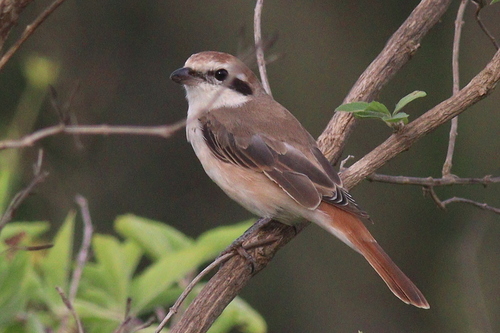
Turkestan Shrike (Lanius phoenicuroides) Turkestan Shrike
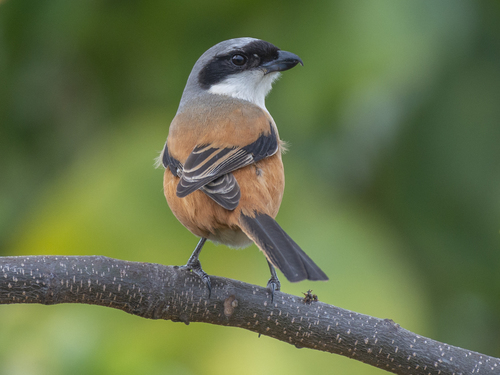
Long-tailed Shrike (Lanius schach) Long-tailed Shrike

Media

Loading…

In short

The Turkestan Shrike and Long-tailed Shrike can be distinguished by tail length and plumage details. The Long-tailed Shrike has a notably longer tail and a more contrasting plumage pattern. Vocalizations are not the most reliable for differentiation in the field.

Identification tips

  1. Tail Length: The Long-tailed Shrike has a significantly longer tail. 2. Head Pattern: Look for the more contrasting head pattern of the Long-tailed Shrike. 3. Habitat: Consider the habitat; Turkestan Shrikes prefer more open areas. 4. Plumage: Note the uniform rufous tones of the Turkestan Shrike compared to the contrasting colors of the Long-tailed Shrike. Consult Birds of the World for detailed comparisons.

Size

The Long-tailed Shrike is generally larger with a longer tail compared to the Turkestan Shrike.

Plumage

The Turkestan Shrike typically shows a more uniform rufous back and tail, while the Long-tailed Shrike has a more contrasting black-and-white head pattern and a longer, more graduated tail.

Behaviour

Both species exhibit typical shrike behavior, such as perching conspicuously and hunting from elevated positions.

Habitat

Turkestan Shrikes are often found in more open, arid habitats, while Long-tailed Shrikes can be seen in a wider range of environments, including more wooded areas.

Voice

Vocalizations are similar and not the most reliable for field identification. Both species have harsh calls typical of shrikes.

Submit a better description

Use the same sections as the comparison. Your text is published immediately.

The Turkestan Shrike and Long-tailed Shrike can be distinguished by tail length and plumage details. The Long-tailed Shrike has a notably longer tail and a more contrasting plumage pattern. Vocalizations are not the most reliable for differentiation in the field.

  1. Tail Length: The Long-tailed Shrike has a significantly longer tail. 2. Head Pattern: Look for the more contrasting head pattern of the Long-tailed Shrike. 3. Habitat: Consider the habitat; Turkestan Shrikes prefer more open areas. 4. Plumage: Note the uniform rufous tones of the Turkestan Shrike compared to the contrasting colors of the Long-tailed Shrike. Consult Birds of the World for detailed comparisons.

The Long-tailed Shrike is generally larger with a longer tail compared to the Turkestan Shrike.

The Turkestan Shrike typically shows a more uniform rufous back and tail, while the Long-tailed Shrike has a more contrasting black-and-white head pattern and a longer, more graduated tail.

Both species exhibit typical shrike behavior, such as perching conspicuously and hunting from elevated positions.

Turkestan Shrikes are often found in more open, arid habitats, while Long-tailed Shrikes can be seen in a wider range of environments, including more wooded areas.

Vocalizations are similar and not the most reliable for field identification. Both species have harsh calls typical of shrikes.

Discard your changes?

You have unsaved edits. If you leave now, those changes will be lost.

Turkestan Shrike · Long-tailed Shrike · My Tricky Birds