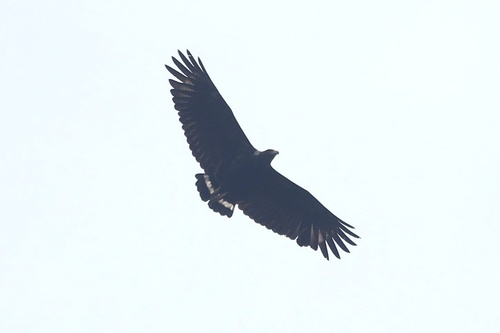
Turkey Vulture vs Solitary Eagle
Cathartes aura versus Buteogallus solitarius
Play a quiz with Turkey Vulture and Solitary Eagle
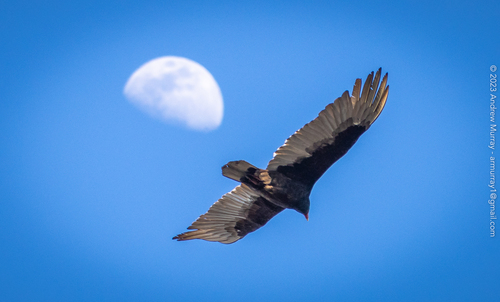
Turkey Vulture
Solitary Eagle
In short
The Turkey Vulture and Solitary Eagle are distinct in appearance and behavior. The Turkey Vulture is recognized by its bare red head and dark plumage, while the Solitary Eagle is a large, dark raptor with a more robust build and is often mistaken for other large hawks. Turkey Vultures are primarily scavengers, whereas Solitary Eagles are snake specialists.
Identification tips
1. Head: Look for the Turkey Vulture's bare red head versus the feathered head of the Solitary Eagle. 2. Flight Pattern: Turkey Vultures have a distinctive V-shaped flight profile with wobbly soaring, while Solitary Eagles have a more stable, direct flight. 3. Habitat: Consider the habitat; Solitary Eagles are more likely in forested mountainous regions, while Turkey Vultures are widespread. 4. Behavior: Turkey Vultures often soar in groups, whereas Solitary Eagles are more solitary.
Size
The Turkey Vulture is large with a wingspan of about 160-183 cm, while the Solitary Eagle is also large but more robust and eagle-like in build.
Plumage
Turkey Vultures have a distinctive bare red head and dark brown to black body. In contrast, the Solitary Eagle is uniformly dark with a slightly paler tail and lacks the bare head.
Behaviour
Turkey Vultures are often seen soaring in groups, using thermals to glide effortlessly. Solitary Eagles, true to their name, are more solitary and are often seen perched or flying alone.
Habitat
Turkey Vultures are adaptable and found in a wide range of habitats, from open areas to forests. Solitary Eagles prefer forested mountains and are less commonly seen.
Voice
Turkey Vultures are generally silent, occasionally making low hisses or grunts. Solitary Eagles are also not known for vocalizations, making them difficult to detect by sound.