Birdr

Two-barred Crossbill vs Eurasian Siskin

Loxia leucoptera versus Spinus spinus

Play a quiz with Two-barred Crossbill and Eurasian Siskin
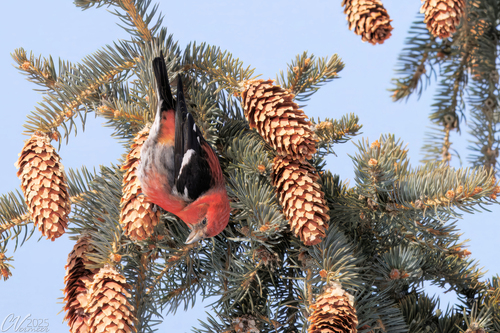
Two-barred Crossbill (Loxia leucoptera) Two-barred Crossbill
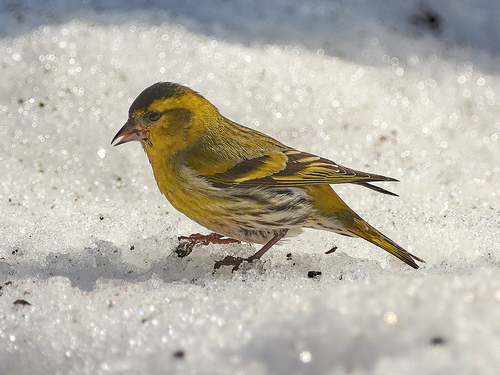
Eurasian Siskin (Spinus spinus) Eurasian Siskin

Media

Loading…

In short

The bill shape is the most reliable field mark to differentiate these species: the Two-barred Crossbill has a distinctive crossed bill, while the Eurasian Siskin has a more typical finch-like bill. Both species can show some yellow in their plumage, but their overall shapes and feeding behaviors are distinct.

Identification tips

Look for the crossed bill of the Two-barred Crossbill when observing feeding behavior. Note the overall body shape: more robust in the crossbill versus the slender siskin. Observe feeding locations: crossbills in coniferous trees, siskins in deciduous trees.

Plumage

The Two-barred Crossbill may show some yellow, but it is generally more robust with a distinctive wing pattern, while the Eurasian Siskin is smaller and more slender with a more uniform yellow-green plumage.

Behaviour

Two-barred Crossbills are often seen using their unique bills to extract seeds from cones, a behavior not observed in Eurasian Siskins, which typically feed on seeds from alder and birch trees.

Submit a better description

Use the same sections as the comparison. Your text is published immediately.

The bill shape is the most reliable field mark to differentiate these species: the Two-barred Crossbill has a distinctive crossed bill, while the Eurasian Siskin has a more typical finch-like bill. Both species can show some yellow in their plumage, but their overall shapes and feeding behaviors are distinct.

Look for the crossed bill of the Two-barred Crossbill when observing feeding behavior. Note the overall body shape: more robust in the crossbill versus the slender siskin. Observe feeding locations: crossbills in coniferous trees, siskins in deciduous trees.

The Two-barred Crossbill may show some yellow, but it is generally more robust with a distinctive wing pattern, while the Eurasian Siskin is smaller and more slender with a more uniform yellow-green plumage.

Two-barred Crossbills are often seen using their unique bills to extract seeds from cones, a behavior not observed in Eurasian Siskins, which typically feed on seeds from alder and birch trees.

Discard your changes?

You have unsaved edits. If you leave now, those changes will be lost.

Two-barred Crossbill · Eurasian Siskin · My Tricky Birds