Birdr

Unicoloured Blackbird vs Chestnut-capped Blackbird

Agelasticus cyanopus versus Chrysomus ruficapillus

Play a quiz with Unicoloured Blackbird and Chestnut-capped Blackbird
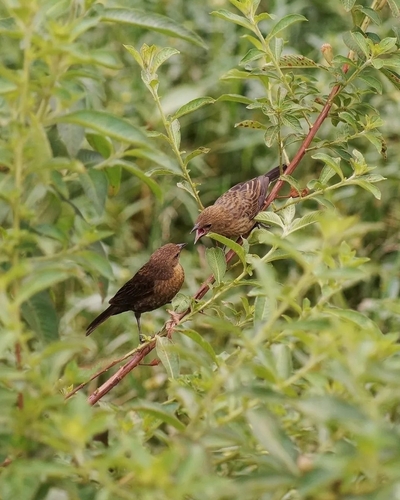
Unicoloured Blackbird (Agelasticus cyanopus) Unicoloured Blackbird
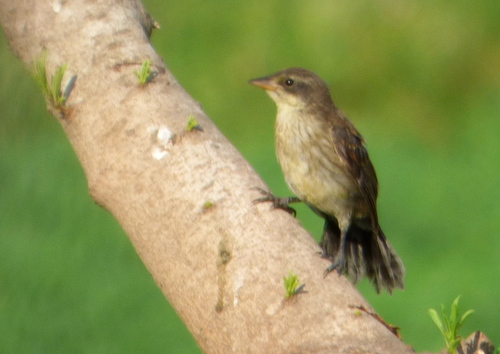
Chestnut-capped Blackbird (Chrysomus ruficapillus) Chestnut-capped Blackbird

Media

Loading…

In short

To distinguish the Unicoloured Blackbird from the Chestnut-capped Blackbird, focus on the head coloration: the Unicoloured Blackbird is entirely black, while the Chestnut-capped Blackbird features a distinctive chestnut cap. Both species are found in marshy habitats, but their vocalizations and social behaviors differ.

Identification tips

  1. Look for the chestnut cap on the Chestnut-capped Blackbird. 2. Note the entirely black plumage of the male Unicoloured Blackbird. 3. Observe social behavior: Chestnut-capped Blackbirds are more likely to be seen in flocks. 4. Listen for vocal differences; Unicoloured Blackbirds have a distinctive whistled song.

Size

Both species are similar in size, typical of small to medium-sized blackbirds.

Plumage

The Unicoloured Blackbird male is entirely black, while the female varies with some yellowish and brown tones. The Chestnut-capped Blackbird is primarily black but has a chestnut cap on its head, which is a key distinguishing feature.

Behaviour

Unicoloured Blackbirds are less gregarious compared to many other blackbirds, whereas Chestnut-capped Blackbirds often form flocks.

Habitat

Both species inhabit marshes and wetlands, but Unicoloured Blackbirds are found in larger expanses of marsh.

Voice

Unicoloured Blackbirds have squeaky and unpleasant calls, with a more attractive whistled song. Chestnut-capped Blackbirds have different vocalizations, but specific details are not provided.

Submit a better description

Use the same sections as the comparison. Your text is published immediately.

To distinguish the Unicoloured Blackbird from the Chestnut-capped Blackbird, focus on the head coloration: the Unicoloured Blackbird is entirely black, while the Chestnut-capped Blackbird features a distinctive chestnut cap. Both species are found in marshy habitats, but their vocalizations and social behaviors differ.

  1. Look for the chestnut cap on the Chestnut-capped Blackbird. 2. Note the entirely black plumage of the male Unicoloured Blackbird. 3. Observe social behavior: Chestnut-capped Blackbirds are more likely to be seen in flocks. 4. Listen for vocal differences; Unicoloured Blackbirds have a distinctive whistled song.

Both species are similar in size, typical of small to medium-sized blackbirds.

The Unicoloured Blackbird male is entirely black, while the female varies with some yellowish and brown tones. The Chestnut-capped Blackbird is primarily black but has a chestnut cap on its head, which is a key distinguishing feature.

Unicoloured Blackbirds are less gregarious compared to many other blackbirds, whereas Chestnut-capped Blackbirds often form flocks.

Both species inhabit marshes and wetlands, but Unicoloured Blackbirds are found in larger expanses of marsh.

Unicoloured Blackbirds have squeaky and unpleasant calls, with a more attractive whistled song. Chestnut-capped Blackbirds have different vocalizations, but specific details are not provided.

Discard your changes?

You have unsaved edits. If you leave now, those changes will be lost.

Unicoloured Blackbird · Chestnut-capped Blackbird · My Tricky Birds