
Birdr

Upland Goose vs Paradise Shelduck

Chloephaga picta versus Tadorna variegata

Play a quiz with Upland Goose and Paradise Shelduck
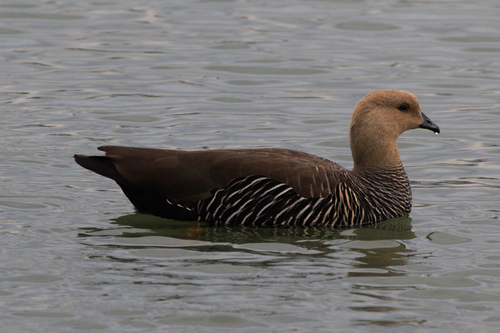
Upland Goose (Chloephaga picta) Upland Goose
Paradise Shelduck (Tadorna variegata) Paradise Shelduck

Media

Loading…

In short

The Upland Goose and Paradise Shelduck are both large waterfowl but can be distinguished by their plumage and habitat preferences. The Upland Goose, native to South America, has a distinct white head and chest in males, while the Paradise Shelduck, found in New Zealand, features striking sexual dimorphism with the male being predominantly black and the female having a white head.

Identification tips

1. Location: Upland Goose in South America vs. Paradise Shelduck in New Zealand. 2. Plumage: Look for the white head of the male Upland Goose vs. the sexual dimorphism in Paradise Shelducks. 3. Habitat: Upland Goose in grasslands vs. Paradise Shelduck near water. 4. Vocalization: Listen for the whistling call of the Upland Goose compared to the honks and melodic calls of the Paradise Shelduck.

Size

Both are large waterfowl, but the Paradise Shelduck is generally larger and bulkier than the Upland Goose.

Plumage

Male Upland Geese have a white head and chest with a barred black-and-white pattern on the back, while females are brown with similar barring. Paradise Shelducks exhibit strong sexual dimorphism: males are mostly black with a greenish sheen, and females have a white head with a chestnut body.

Behaviour

Upland Geese are often seen grazing in pairs or small groups, while Paradise Shelducks are more likely to be observed in pairs or family groups, often near water.

Habitat

Upland Geese are typically found in open grasslands and pastures in southern South America, whereas Paradise Shelducks prefer wetlands, lakes, and rivers in New Zealand.

Voice

Upland Geese have a high-pitched, whistling call, while Paradise Shelducks produce a range of calls, with males having a deeper honk and females a higher-pitched, more melodious call.

Submit a better description

Use the same sections as the comparison. Your text is published immediately.

The Upland Goose and Paradise Shelduck are both large waterfowl but can be distinguished by their plumage and habitat preferences. The Upland Goose, native to South America, has a distinct white head and chest in males, while the Paradise Shelduck, found in New Zealand, features striking sexual dimorphism with the male being predominantly black and the female having a white head.

1. Location: Upland Goose in South America vs. Paradise Shelduck in New Zealand. 2. Plumage: Look for the white head of the male Upland Goose vs. the sexual dimorphism in Paradise Shelducks. 3. Habitat: Upland Goose in grasslands vs. Paradise Shelduck near water. 4. Vocalization: Listen for the whistling call of the Upland Goose compared to the honks and melodic calls of the Paradise Shelduck.

Both are large waterfowl, but the Paradise Shelduck is generally larger and bulkier than the Upland Goose.

Male Upland Geese have a white head and chest with a barred black-and-white pattern on the back, while females are brown with similar barring. Paradise Shelducks exhibit strong sexual dimorphism: males are mostly black with a greenish sheen, and females have a white head with a chestnut body.

Upland Geese are often seen grazing in pairs or small groups, while Paradise Shelducks are more likely to be observed in pairs or family groups, often near water.

Upland Geese are typically found in open grasslands and pastures in southern South America, whereas Paradise Shelducks prefer wetlands, lakes, and rivers in New Zealand.

Upland Geese have a high-pitched, whistling call, while Paradise Shelducks produce a range of calls, with males having a deeper honk and females a higher-pitched, more melodious call.

Discard your changes?

You have unsaved edits. If you leave now, those changes will be lost.

Upland Goose · Paradise Shelduck · My Tricky Birds