Birdr

Upland Pipit vs Rosy Pipit

Anthus sylvanus versus Anthus roseatus

Play a quiz with Upland Pipit and Rosy Pipit
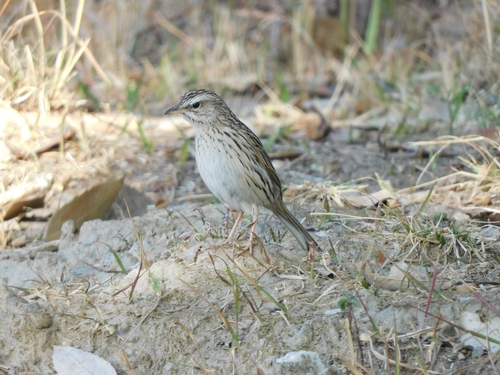
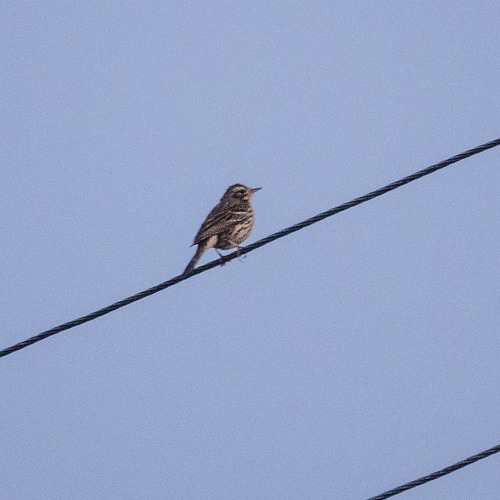
Upland Pipit (Anthus sylvanus) Upland Pipit
Rosy Pipit (Anthus roseatus) Rosy Pipit

Media

Loading…

In short

The most reliable way to separate Upland Pipit from Rosy Pipit in the field is by habitat and context: Upland Pipit is strongly tied to upland grasslands above 500m, while Rosy Pipit is more widespread and can be found in a broader range of open habitats, including lower elevations. Both species overlap in much of their range, but Upland Pipit is more restricted by altitude. Plumage and structural differences are subtle and not well documented in the sources, so careful attention to location and habitat is often your best clue. Size is very similar, with Rosy Pipit averaging about 21g, and no clear difference in structure or flight style is documented in the available notes.

Identification tips

  1. Habitat and elevation are your best clues: Upland Pipit is almost always found in upland grasslands above 500m, while Rosy Pipit can be found in a much wider range of open habitats, including lowlands. If you're in a high, dry, grassy area, lean toward Upland Pipit.
  2. Geographical overlap: Both species occur in Afghanistan, China, India, Nepal, and Pakistan, so range alone will not separate them, but Upland Pipit is more restricted by altitude.
  3. Plumage is not a reliable separator: Both have typical pipit streaked brown upperparts and paler underparts, with no documented age-specific wing or flight pattern differences in the sources.
  4. Size is similar: Rosy Pipit averages 21g; Upland Pipit is likely similar. Do not rely on size for separation.
  5. No documented structural differences: There are no notes on bill shape, tail length, or primary projection that would help in the field.
  6. Behavioral cues are not helpful: Both species behave like typical pipits, walking or running on the ground in open areas.
  7. No distinctive flight marks: There is no mention of unique upperwing patterns, tail markings, or flight silhouettes that can be used to separate these species in flight.
  8. Vocalizations not covered: If you have a recording or hear a call, consult a specialized guide, as no vocal differences are provided here.
  9. Seasonal context: Both species can be present in overlapping regions year-round, but Upland Pipit is more likely in breeding season at higher elevations.
  10. If in doubt, prioritize habitat and elevation: When all else fails, use the context of where you found the bird as your main clue.

In summary, for these two pipits, focus on where you are and the habitat more than on field marks, as plumage and structure are not reliably separable with the available information.

Size

Rosy Pipit has a documented average body mass of 21g, while no specific mass is given for Upland Pipit, but both are medium-sized pipits and likely overlap in size. In the field, neither species is likely to stand out as distinctly larger or smaller than the other, so size alone is not a reliable separator.

Plumage

No detailed age-specific or seasonal plumage differences are provided in the sources for these two species. Both are typical pipits with streaked brown upperparts and paler, streaked underparts. There is no mention of distinctive juvenile or first-winter upperwing patterns, such as black triangles or strong wing panels, for either species. Any subtle differences in plumage are not covered in the available notes, so field separation by plumage alone is likely to be very challenging.

Behaviour

Behavioral differences are not described in the sources. Both species are typical pipits, likely to be seen walking or running on the ground in open areas, and may show similar flight and foraging behaviors. No differences in jizz, tail wagging, or flight style are noted.

Habitat

Habitat is the most useful separator: Upland Pipit is closely associated with mountainous grasslands above 500m, often in open, grassy uplands. Rosy Pipit has a much broader habitat tolerance, occurring in a wide range of open areas, including lower elevations and possibly wetter or more disturbed grasslands. If you find a pipit in high-elevation, dry, grassy slopes, Upland Pipit is more likely; in lowland or varied open habitats, especially outside the core upland zone, Rosy Pipit is the better bet.

Submit a better description

Use the same sections as the comparison. Your text is published immediately.

The most reliable way to separate Upland Pipit from Rosy Pipit in the field is by habitat and context: Upland Pipit is strongly tied to upland grasslands above 500m, while Rosy Pipit is more widespread and can be found in a broader range of open habitats, including lower elevations. Both species overlap in much of their range, but Upland Pipit is more restricted by altitude. Plumage and structural differences are subtle and not well documented in the sources, so careful attention to location and habitat is often your best clue. Size is very similar, with Rosy Pipit averaging about 21g, and no clear difference in structure or flight style is documented in the available notes.

  1. Habitat and elevation are your best clues: Upland Pipit is almost always found in upland grasslands above 500m, while Rosy Pipit can be found in a much wider range of open habitats, including lowlands. If you're in a high, dry, grassy area, lean toward Upland Pipit.
  2. Geographical overlap: Both species occur in Afghanistan, China, India, Nepal, and Pakistan, so range alone will not separate them, but Upland Pipit is more restricted by altitude.
  3. Plumage is not a reliable separator: Both have typical pipit streaked brown upperparts and paler underparts, with no documented age-specific wing or flight pattern differences in the sources.
  4. Size is similar: Rosy Pipit averages 21g; Upland Pipit is likely similar. Do not rely on size for separation.
  5. No documented structural differences: There are no notes on bill shape, tail length, or primary projection that would help in the field.
  6. Behavioral cues are not helpful: Both species behave like typical pipits, walking or running on the ground in open areas.
  7. No distinctive flight marks: There is no mention of unique upperwing patterns, tail markings, or flight silhouettes that can be used to separate these species in flight.
  8. Vocalizations not covered: If you have a recording or hear a call, consult a specialized guide, as no vocal differences are provided here.
  9. Seasonal context: Both species can be present in overlapping regions year-round, but Upland Pipit is more likely in breeding season at higher elevations.
  10. If in doubt, prioritize habitat and elevation: When all else fails, use the context of where you found the bird as your main clue.

In summary, for these two pipits, focus on where you are and the habitat more than on field marks, as plumage and structure are not reliably separable with the available information.

Rosy Pipit has a documented average body mass of 21g, while no specific mass is given for Upland Pipit, but both are medium-sized pipits and likely overlap in size. In the field, neither species is likely to stand out as distinctly larger or smaller than the other, so size alone is not a reliable separator.

No detailed age-specific or seasonal plumage differences are provided in the sources for these two species. Both are typical pipits with streaked brown upperparts and paler, streaked underparts. There is no mention of distinctive juvenile or first-winter upperwing patterns, such as black triangles or strong wing panels, for either species. Any subtle differences in plumage are not covered in the available notes, so field separation by plumage alone is likely to be very challenging.

Behavioral differences are not described in the sources. Both species are typical pipits, likely to be seen walking or running on the ground in open areas, and may show similar flight and foraging behaviors. No differences in jizz, tail wagging, or flight style are noted.

Habitat is the most useful separator: Upland Pipit is closely associated with mountainous grasslands above 500m, often in open, grassy uplands. Rosy Pipit has a much broader habitat tolerance, occurring in a wide range of open areas, including lower elevations and possibly wetter or more disturbed grasslands. If you find a pipit in high-elevation, dry, grassy slopes, Upland Pipit is more likely; in lowland or varied open habitats, especially outside the core upland zone, Rosy Pipit is the better bet.

Discard your changes?

You have unsaved edits. If you leave now, those changes will be lost.

Upland Pipit · Rosy Pipit · My Tricky Birds