
Ural Owl vs Long-eared Owl
Strix uralensis versus Asio otus
Play a quiz with Ural Owl and Long-eared Owl
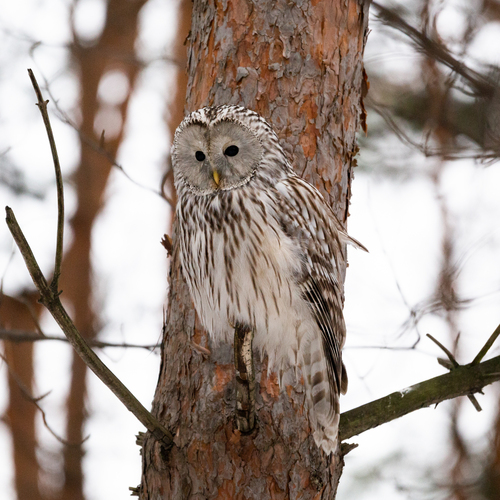
Ural Owl
In short
The Ural Owl and Long-eared Owl can be distinguished by their size and facial features. The Ural Owl is larger and lacks the prominent ear tufts of the Long-eared Owl. Both species have similar mottled plumage, but their facial discs and overall size are key identifiers.
Identification tips
- Size and Shape: Look for the larger size and lack of ear tufts in the Ural Owl. 2. Facial Features: Note the prominent ear tufts on the Long-eared Owl. 3. Habitat: Consider the habitat; Ural Owls in forests, Long-eared Owls in open areas. 4. Vocalization: Listen for the deeper hoot of the Ural Owl versus the softer calls of the Long-eared Owl.
Size
The Ural Owl is significantly larger, with a robust body and broad wings, while the Long-eared Owl is more slender and medium-sized.
Plumage
Both species have mottled brown and gray plumage, but the Ural Owl has a more uniform and paler appearance. The Long-eared Owl features distinct ear tufts and a more contrasting facial disc.
Behaviour
The Long-eared Owl often roosts communally, especially in winter, which is not typical for the solitary Ural Owl. Both hunt primarily at night.
Habitat
The Ural Owl prefers dense forests, while the Long-eared Owl is found in open habitats for hunting but roosts in dense vegetation.
Voice
The Ural Owl has a deep, resonant hoot, while the Long-eared Owl's call is a series of soft, hooting notes. Their vocalizations are distinct if heard.