Ural Owl vs Short-eared Owl
Strix uralensis versus Asio flammeus
Play a quiz with Ural Owl and Short-eared Owl
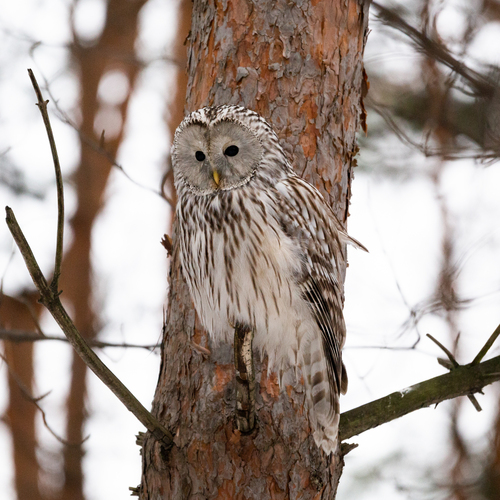
Ural Owl
Short-eared Owl
In short
The Ural Owl and Short-eared Owl can be distinguished by their size and habitat preferences. The Ural Owl is larger and prefers dense forests, while the Short-eared Owl is smaller, with a preference for open grasslands and marshes.
Identification tips
- Size and Shape: Look for the larger size and bulkier body of the Ural Owl compared to the more slender Short-eared Owl. 2. Facial Features: Note the absence of ear tufts on the Ural Owl and the presence of prominent ear tufts on the Short-eared Owl. 3. Habitat: Consider the environment; Ural Owls are in forests, Short-eared Owls in open areas. 4. Flight Behavior: Observe flight patterns; Short-eared Owls often fly low over fields during the day.
Size
The Ural Owl is significantly larger and bulkier than the Short-eared Owl.
Plumage
The Ural Owl has a more uniform grayish-brown plumage with a distinct facial disc and no ear tufts, while the Short-eared Owl has a more mottled appearance with prominent ear tufts and yellow eyes.
Behaviour
Ural Owls are more sedentary and territorial, often seen perched quietly in forests. Short-eared Owls are more nomadic, often seen flying low over open fields during the day.
Habitat
Ural Owls inhabit dense, mature forests, whereas Short-eared Owls prefer open habitats like grasslands, marshes, and tundra.
Voice
Ural Owls have a deep, resonant hoot, while Short-eared Owls produce a series of short barks and hoots, often heard during flight displays.