Birdr

Variable Antshrike vs Stripe-backed Antbird

Thamnophilus caerulescens versus Myrmorchilus strigilatus

Play a quiz with Variable Antshrike and Stripe-backed Antbird
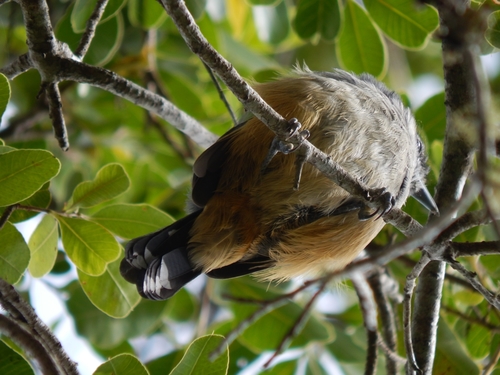
Variable Antshrike (Thamnophilus caerulescens) Variable Antshrike
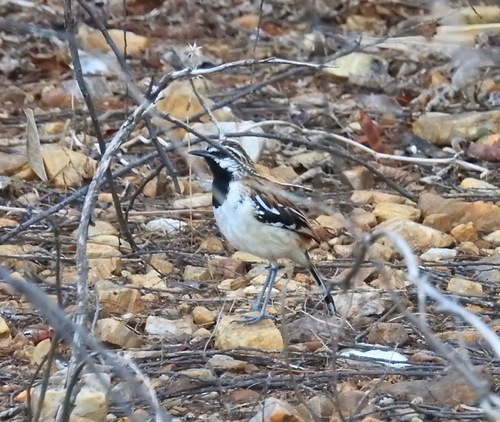
Stripe-backed Antbird (Myrmorchilus strigilatus) Stripe-backed Antbird

Media

Loading…

In short

The Variable Antshrike and Stripe-backed Antbird can be distinguished by their plumage and habitat preferences. The Variable Antshrike is more uniform in color, while the Stripe-backed Antbird has distinctive striping on its back. Both species are found in forested areas, but the Variable Antshrike is often seen in more open situations.

Identification tips

Size

Both species are similar in size, typical of small antbirds.

Plumage

The Variable Antshrike male is grey with a black forehead and crown, while females are clay-colored with cinnamon-tawny underparts. The Stripe-backed Antbird has a distinctive striped back, with males displaying a black and white pattern and females having a more subdued coloration.

Behaviour

Variable Antshrikes make short hops and frequently change direction when foraging, often lunging to glean prey. Stripe-backed Antbirds are less described in behavior but are typical antbirds in their foraging habits.

Habitat

Variable Antshrikes are found in the forest understory, often in more open areas than other antshrikes. Stripe-backed Antbirds are also found in forested areas but prefer denser thickets and scrub.

Voice

Vocalizations are not detailed in the notes, but both species likely have distinctive calls typical of antbirds.

Submit a better description

Use the same sections as the comparison. Your text is published immediately.

The Variable Antshrike and Stripe-backed Antbird can be distinguished by their plumage and habitat preferences. The Variable Antshrike is more uniform in color, while the Stripe-backed Antbird has distinctive striping on its back. Both species are found in forested areas, but the Variable Antshrike is often seen in more open situations.

  • Look for the striped back on the Stripe-backed Antbird, which is a key distinguishing feature.
  • Observe the habitat: Variable Antshrikes are more likely to be seen in open forest understory.
  • Note the plumage: Variable Antshrike males are grey with black accents, while females are clay-colored; Stripe-backed Antbirds have a more patterned appearance.
  • Behavior: Variable Antshrikes' frequent hopping and direction changes can be a clue.

Both species are similar in size, typical of small antbirds.

The Variable Antshrike male is grey with a black forehead and crown, while females are clay-colored with cinnamon-tawny underparts. The Stripe-backed Antbird has a distinctive striped back, with males displaying a black and white pattern and females having a more subdued coloration.

Variable Antshrikes make short hops and frequently change direction when foraging, often lunging to glean prey. Stripe-backed Antbirds are less described in behavior but are typical antbirds in their foraging habits.

Variable Antshrikes are found in the forest understory, often in more open areas than other antshrikes. Stripe-backed Antbirds are also found in forested areas but prefer denser thickets and scrub.

Vocalizations are not detailed in the notes, but both species likely have distinctive calls typical of antbirds.

Discard your changes?

You have unsaved edits. If you leave now, those changes will be lost.

Variable Antshrike · Stripe-backed Antbird · My Tricky Birds