Birdr

Veery vs Grey-cheeked Thrush

Catharus fuscescens versus Catharus minimus

Play a quiz with Veery and Grey-cheeked Thrush
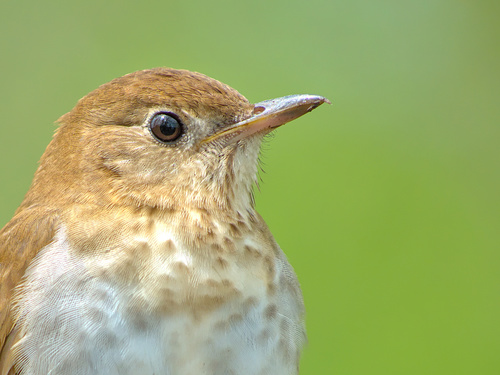
Veery (Catharus fuscescens) Veery
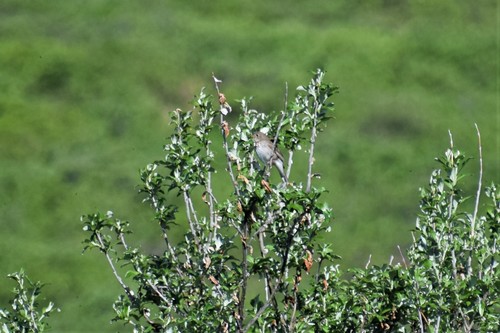
Grey-cheeked Thrush (Catharus minimus) Grey-cheeked Thrush

Media

Loading…

In short

The Veery and Grey-cheeked Thrush are both small, brown thrushes, but the Veery is more uniformly tawny with a less distinct face pattern, while the Grey-cheeked Thrush has a more defined grey face and cheek. Their songs also differ, with the Veery's being more ethereal and descending.

Identification tips

1. Look for the Veery's warm, tawny coloration and less distinct face pattern. 2. Note the Grey-cheeked Thrush's grey face and more defined spotting on the breast. 3. Listen for the Veery's descending, ethereal song compared to the Grey-cheeked Thrush's simpler, flute-like song. 4. Consider habitat: Veerys are in wetter, younger woodlands; Grey-cheeked Thrushes prefer coniferous areas.

Size

Both species are similar in size, typical of small thrushes, with no significant size difference to aid identification.

Plumage

The Veery is a warm, tawny brown overall with a less distinct facial pattern and faint spotting on the chest. In contrast, the Grey-cheeked Thrush has a more defined grey face and cheek, with a more olive-brown back and distinct spotting on the breast.

Behaviour

Both species are ground foragers, primarily feeding on insects and fruit. They exhibit similar behaviors during migration and breeding, often seen in dense undergrowth.

Habitat

The Veery prefers damp, deciduous forests often near streams or swamps, while the Grey-cheeked Thrush is found in brushy willow-alder thickets and conifer forests with dense undergrowth.

Voice

The Veery's song is a distinctive, ethereal, descending series of notes, while the Grey-cheeked Thrush's song is a simpler, flute-like series of phrases. Calls are similar and not a reliable distinguishing feature.

Submit a better description

Use the same sections as the comparison. Your text is published immediately.

The Veery and Grey-cheeked Thrush are both small, brown thrushes, but the Veery is more uniformly tawny with a less distinct face pattern, while the Grey-cheeked Thrush has a more defined grey face and cheek. Their songs also differ, with the Veery's being more ethereal and descending.

1. Look for the Veery's warm, tawny coloration and less distinct face pattern. 2. Note the Grey-cheeked Thrush's grey face and more defined spotting on the breast. 3. Listen for the Veery's descending, ethereal song compared to the Grey-cheeked Thrush's simpler, flute-like song. 4. Consider habitat: Veerys are in wetter, younger woodlands; Grey-cheeked Thrushes prefer coniferous areas.

Both species are similar in size, typical of small thrushes, with no significant size difference to aid identification.

The Veery is a warm, tawny brown overall with a less distinct facial pattern and faint spotting on the chest. In contrast, the Grey-cheeked Thrush has a more defined grey face and cheek, with a more olive-brown back and distinct spotting on the breast.

Both species are ground foragers, primarily feeding on insects and fruit. They exhibit similar behaviors during migration and breeding, often seen in dense undergrowth.

The Veery prefers damp, deciduous forests often near streams or swamps, while the Grey-cheeked Thrush is found in brushy willow-alder thickets and conifer forests with dense undergrowth.

The Veery's song is a distinctive, ethereal, descending series of notes, while the Grey-cheeked Thrush's song is a simpler, flute-like series of phrases. Calls are similar and not a reliable distinguishing feature.

Discard your changes?

You have unsaved edits. If you leave now, those changes will be lost.

Veery · Grey-cheeked Thrush · My Tricky Birds