Birdr

Veery vs Wood Thrush

Catharus fuscescens versus Hylocichla mustelina

Play a quiz with Veery and Wood Thrush
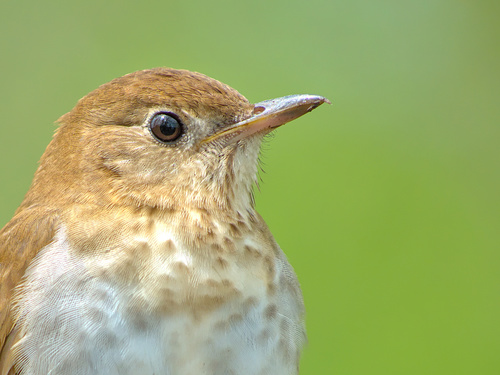
Veery (Catharus fuscescens) Veery
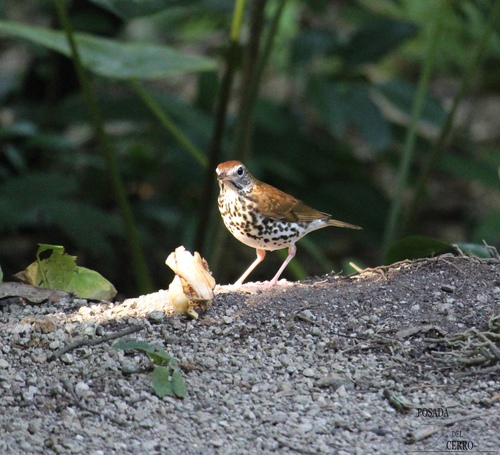
Wood Thrush (Hylocichla mustelina) Wood Thrush

Media

Loading…

In short

The Veery and Wood Thrush are both medium-sized thrushes found in North American forests, but they can be distinguished by their plumage and vocalizations. The Veery is generally more uniformly tawny with faint spotting, while the Wood Thrush has bolder, darker spots on a white breast. Their songs are also distinct, with the Veery's being a cascading, flute-like series of notes and the Wood Thrush's being more ethereal and complex.

Identification tips

  1. Plumage: Look for the bold, dark spots on the Wood Thrush's white breast compared to the Veery's faint spotting. 2. Habitat: Note the habitat; Veerys prefer wetter, younger forests. 3. Song: Listen for the Veery's cascading notes versus the Wood Thrush's complex, ethereal song. 4. Size and Structure: The Wood Thrush is slightly larger and more robust.

Size

Both species are similar in size, but the Wood Thrush is slightly larger and more robust than the Veery.

Plumage

The Veery has a more uniform tawny coloration with faint spotting on the breast, whereas the Wood Thrush displays bold, dark spots on a white breast and a more contrasting head pattern.

Behaviour

Both species forage primarily on the ground, but the Veery is more likely to be found in wetter, younger woodlands.

Habitat

The Veery prefers damp, early-successional deciduous forests, often near streams or swamps. The Wood Thrush is found in mature deciduous forests, often in drier areas compared to the Veery.

Voice

The Veery's song is a cascading, flute-like series of notes, while the Wood Thrush's song is more complex and ethereal, often with two notes sung simultaneously.

Submit a better description

Use the same sections as the comparison. Your text is published immediately.

The Veery and Wood Thrush are both medium-sized thrushes found in North American forests, but they can be distinguished by their plumage and vocalizations. The Veery is generally more uniformly tawny with faint spotting, while the Wood Thrush has bolder, darker spots on a white breast. Their songs are also distinct, with the Veery's being a cascading, flute-like series of notes and the Wood Thrush's being more ethereal and complex.

  1. Plumage: Look for the bold, dark spots on the Wood Thrush's white breast compared to the Veery's faint spotting. 2. Habitat: Note the habitat; Veerys prefer wetter, younger forests. 3. Song: Listen for the Veery's cascading notes versus the Wood Thrush's complex, ethereal song. 4. Size and Structure: The Wood Thrush is slightly larger and more robust.

Both species are similar in size, but the Wood Thrush is slightly larger and more robust than the Veery.

The Veery has a more uniform tawny coloration with faint spotting on the breast, whereas the Wood Thrush displays bold, dark spots on a white breast and a more contrasting head pattern.

Both species forage primarily on the ground, but the Veery is more likely to be found in wetter, younger woodlands.

The Veery prefers damp, early-successional deciduous forests, often near streams or swamps. The Wood Thrush is found in mature deciduous forests, often in drier areas compared to the Veery.

The Veery's song is a cascading, flute-like series of notes, while the Wood Thrush's song is more complex and ethereal, often with two notes sung simultaneously.

Discard your changes?

You have unsaved edits. If you leave now, those changes will be lost.

Veery · Wood Thrush · My Tricky Birds