Birdr

Velvet Scoter vs Common Scoter

Melanitta fusca versus Melanitta nigra

Play a quiz with Velvet Scoter and Common Scoter
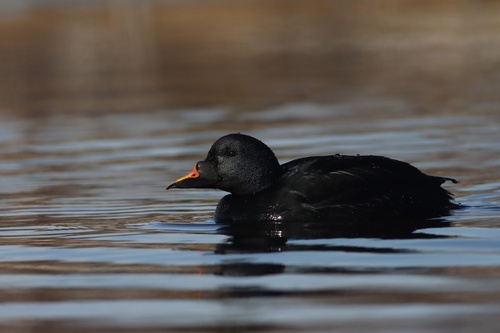
Velvet Scoter (Melanitta fusca) Velvet Scoter
Common Scoter (Melanitta nigra) Common Scoter

Media

Loading…

In short

Velvet Scoter and Common Scoter are both sea ducks with similar dark plumage, but they can be distinguished by the presence of a white wing patch in Velvet Scoter, absent in Common Scoter. Males of both species have distinct bill patterns: Velvet Scoter males have a yellow-orange knob at the base of the bill, while Common Scoter males have a more uniform black bill with a small yellow patch.

Identification tips

  1. Look for the white wing patch in Velvet Scoter, absent in Common Scoter. 2. Note the bill pattern: Velvet Scoter males have a yellow-orange knob, while Common Scoter males have a small yellow patch. 3. Observe the plumage: Velvet Scoter males are black with a white wing patch, while Common Scoter males are uniformly black. 4. Listen for vocalizations: Velvet Scoter males may whistle, while Common Scoter males have harsher calls.

Size

Both species are similar in size, but Velvet Scoter is slightly larger overall.

Plumage

Velvet Scoter males are black with a white wing patch, while Common Scoter males are uniformly black without a wing patch. Females of both species are dark brown, but Velvet Scoter females also show the white wing patch.

Behaviour

Both species are diving ducks, often seen in flocks at sea. Their flight is direct and fast.

Habitat

Both species are found in marine environments, particularly in coastal waters during winter. They breed in freshwater lakes and rivers in northern regions.

Voice

Both species are generally silent, but Velvet Scoter males may produce thin, piping whistles, while Common Scoter males have harsher calls.

Submit a better description

Use the same sections as the comparison. Your text is published immediately.

Velvet Scoter and Common Scoter are both sea ducks with similar dark plumage, but they can be distinguished by the presence of a white wing patch in Velvet Scoter, absent in Common Scoter. Males of both species have distinct bill patterns: Velvet Scoter males have a yellow-orange knob at the base of the bill, while Common Scoter males have a more uniform black bill with a small yellow patch.

  1. Look for the white wing patch in Velvet Scoter, absent in Common Scoter. 2. Note the bill pattern: Velvet Scoter males have a yellow-orange knob, while Common Scoter males have a small yellow patch. 3. Observe the plumage: Velvet Scoter males are black with a white wing patch, while Common Scoter males are uniformly black. 4. Listen for vocalizations: Velvet Scoter males may whistle, while Common Scoter males have harsher calls.

Both species are similar in size, but Velvet Scoter is slightly larger overall.

Velvet Scoter males are black with a white wing patch, while Common Scoter males are uniformly black without a wing patch. Females of both species are dark brown, but Velvet Scoter females also show the white wing patch.

Both species are diving ducks, often seen in flocks at sea. Their flight is direct and fast.

Both species are found in marine environments, particularly in coastal waters during winter. They breed in freshwater lakes and rivers in northern regions.

Both species are generally silent, but Velvet Scoter males may produce thin, piping whistles, while Common Scoter males have harsher calls.

Discard your changes?

You have unsaved edits. If you leave now, those changes will be lost.

Velvet Scoter · Common Scoter · My Tricky Birds