Velvet Scoter vs Stejneger's Scoter
Melanitta fusca versus Melanitta stejnegeri
Play a quiz with Velvet Scoter and Stejneger's Scoter
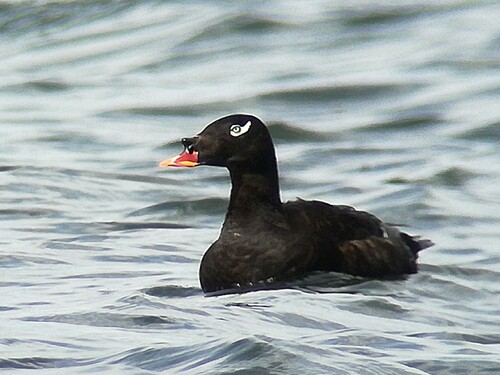
Velvet Scoter
Stejneger's Scoter
In short
The Velvet Scoter and Stejneger's Scoter are similar sea ducks best distinguished by bill shape and coloration. Velvet Scoter males have a more prominent, bulbous yellow-orange knob at the base of the bill, while Stejneger's Scoter males have a less pronounced knob and a more uniformly colored bill. Females of both species are more challenging to differentiate, often requiring close observation of subtle bill and head shape differences.
Identification tips
1. Bill Shape and Color: Velvet Scoter males have a larger, more bulbous yellow-orange knob at the bill base, while Stejneger's Scoter males have a smaller, less distinct knob. 2. Eye Patch: Velvet Scoter males have a more noticeable white patch under the eye. 3. Range: Consider geographical location; Velvet Scoter is more likely in Europe, while Stejneger's Scoter is more likely in Asia. 4. Females: Look for subtle differences in bill shape and head profile, as plumage is very similar.
Size
Both species are similar in size, with no significant differences that are easily observable in the field.
Plumage
Males of both species are mostly black, but Velvet Scoter males have a more pronounced white patch under the eye. Females are dark brown with pale cheeks in both species, making them difficult to differentiate by plumage alone.
Behaviour
Both species exhibit similar diving behavior and are often seen in flocks during migration and winter.
Habitat
Both species inhabit coastal waters, often seen in bays and estuaries during winter. Velvet Scoter is more commonly found in the western Palearctic, while Stejneger's Scoter is more prevalent in eastern Asia.
Voice
Vocalizations are not typically used for field identification as both species are generally quiet and their calls are not well-documented.