Birdr

Virginia Rail vs Spotted Rail

Rallus limicola versus Pardirallus maculatus

Play a quiz with Virginia Rail and Spotted Rail
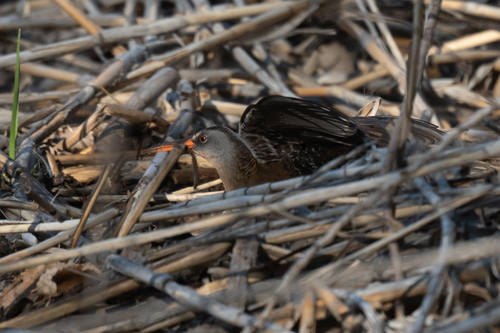
Virginia Rail (Rallus limicola) Virginia Rail
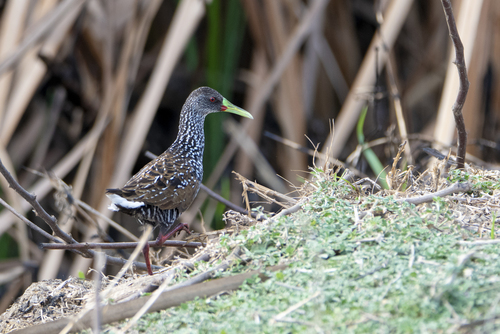
Spotted Rail (Pardirallus maculatus) Spotted Rail

Media

Loading…

In short

The Virginia Rail and Spotted Rail can be differentiated by their bill shape and plumage patterns. The Virginia Rail has a long, slightly decurved bill and a more uniform coloration, while the Spotted Rail features a straight bill and distinctive spotting on its body. Both species inhabit marshy areas, but their vocalizations and behaviors can also help in identification.

Identification tips

1. Bill Shape: Look for the Virginia Rail's long, slightly decurved bill versus the Spotted Rail's straight bill. 2. Plumage Patterns: Note the Virginia Rail's uniform coloration compared to the Spotted Rail's distinctive spotting. 3. Vocalizations: Listen for the Virginia Rail's grunting calls and the Spotted Rail's whistles and clicks. 4. Habitat: Consider the location; Virginia Rails are more common in North American marshes, while Spotted Rails are found further south.

Size

Both species are similar in size, but the Spotted Rail may appear slightly larger due to its more robust build.

Plumage

The Virginia Rail has a more uniform brownish plumage with a gray face and reddish legs, while the Spotted Rail is characterized by its spotted body, with white spots on a darker background, and a gray throat.

Behaviour

Virginia Rails are more likely to be seen running through dense vegetation, while Spotted Rails may be observed feeding in more open areas. Both species are secretive and often escape by running or diving.

Habitat

Both species inhabit marshes and wetlands, but the Virginia Rail is more often found in North American wetlands, while the Spotted Rail is more widespread in Central and South America.

Voice

Virginia Rails have a distinctive series of grunting calls, while Spotted Rails produce a variety of whistles and clicks. Listening for these vocalizations can aid in identification.

Submit a better description

Use the same sections as the comparison. Your text is published immediately.

The Virginia Rail and Spotted Rail can be differentiated by their bill shape and plumage patterns. The Virginia Rail has a long, slightly decurved bill and a more uniform coloration, while the Spotted Rail features a straight bill and distinctive spotting on its body. Both species inhabit marshy areas, but their vocalizations and behaviors can also help in identification.

1. Bill Shape: Look for the Virginia Rail's long, slightly decurved bill versus the Spotted Rail's straight bill. 2. Plumage Patterns: Note the Virginia Rail's uniform coloration compared to the Spotted Rail's distinctive spotting. 3. Vocalizations: Listen for the Virginia Rail's grunting calls and the Spotted Rail's whistles and clicks. 4. Habitat: Consider the location; Virginia Rails are more common in North American marshes, while Spotted Rails are found further south.

Both species are similar in size, but the Spotted Rail may appear slightly larger due to its more robust build.

The Virginia Rail has a more uniform brownish plumage with a gray face and reddish legs, while the Spotted Rail is characterized by its spotted body, with white spots on a darker background, and a gray throat.

Virginia Rails are more likely to be seen running through dense vegetation, while Spotted Rails may be observed feeding in more open areas. Both species are secretive and often escape by running or diving.

Both species inhabit marshes and wetlands, but the Virginia Rail is more often found in North American wetlands, while the Spotted Rail is more widespread in Central and South America.

Virginia Rails have a distinctive series of grunting calls, while Spotted Rails produce a variety of whistles and clicks. Listening for these vocalizations can aid in identification.

Discard your changes?

You have unsaved edits. If you leave now, those changes will be lost.

Virginia Rail · Spotted Rail · My Tricky Birds