Wandering Tattler vs Black-naped Tern
Tringa incana versus Sterna sumatrana
Play a quiz with Wandering Tattler and Black-naped Tern
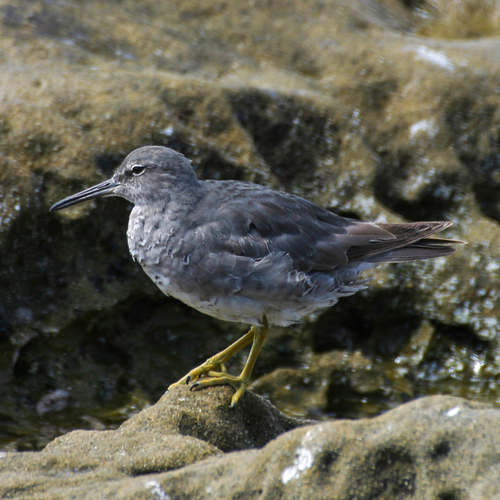
Wandering Tattler
Black-naped Tern
In short
The Wandering Tattler and Black-naped Tern are distinctly different in appearance and behavior, making them relatively easy to distinguish in the field. The Wandering Tattler is a shorebird with a more subdued plumage and a preference for rocky coastal habitats, while the Black-naped Tern is a sleek, white seabird often found in tropical and subtropical waters.
Identification tips
- Look for habitat: Wandering Tattlers are usually found on rocky shores, while Black-naped Terns are seen over open water.
- Check plumage: Wandering Tattlers have a grayish body with a white supercilium, whereas Black-naped Terns are mostly white with a black nape.
- Observe behavior: Wandering Tattlers are solitary or in small groups, while Black-naped Terns are often in flocks.
- Consider location: Wandering Tattlers are more likely to be seen in temperate regions during migration, while Black-naped Terns are found in tropical and subtropical areas.
Size
The Wandering Tattler is a medium-sized shorebird, while the Black-naped Tern is a small to medium-sized tern.
Plumage
Wandering Tattlers have a grayish plumage with a barred underbelly and a distinctive white supercilium. In contrast, Black-naped Terns are predominantly white with a distinctive black nape and cap.
Behaviour
Wandering Tattlers are often seen foraging alone or in small groups along rocky shores. Black-naped Terns are more social, often seen in flocks, and are known for their graceful flight over open water.
Habitat
Wandering Tattlers prefer rocky coastlines and riverine habitats, particularly during migration. Black-naped Terns are typically found in tropical and subtropical marine environments, often near islands and coral reefs.
Voice
Vocalizations are not a primary distinguishing feature between these species, but Wandering Tattlers are known for their sharp, whistled calls, while Black-naped Terns have a more typical tern-like, high-pitched call.