Birdr

Wattled Lapwing vs Glossy Ibis

Vanellus senegallus versus Plegadis falcinellus

Play a quiz with Wattled Lapwing and Glossy Ibis
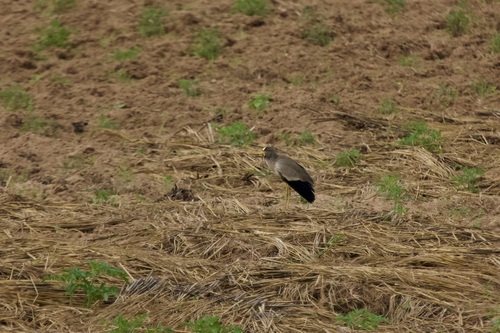
Wattled Lapwing (Vanellus senegallus) Wattled Lapwing
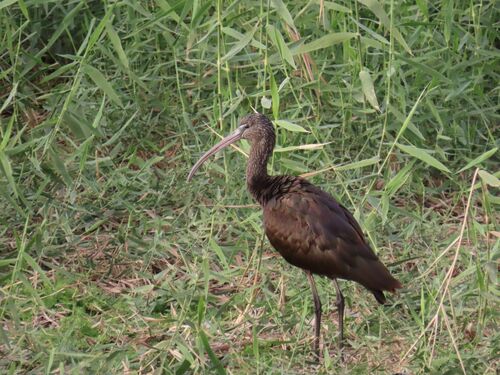
Glossy Ibis (Plegadis falcinellus) Glossy Ibis

Media

Loading…

In short

The Wattled Lapwing and Glossy Ibis are distinct in both structure and habitat preference. The Wattled Lapwing is a terrestrial bird with a prominent facial wattle, while the Glossy Ibis is a wetland bird with a long, decurved bill and iridescent plumage.

Identification tips

Look for the yellow facial wattle on the Wattled Lapwing, a key feature absent in the Glossy Ibis. Note the long, decurved bill and iridescent plumage of the Glossy Ibis when in wetland areas. Consider habitat: grasslands for the lapwing and wetlands for the ibis. If in doubt, the ibis's gregarious behavior and colonial nesting can also be a clue.

Size

The Wattled Lapwing is smaller and more compact compared to the larger, more elongated Glossy Ibis.

Plumage

The Wattled Lapwing has a grayish-brown body with a distinctive yellow facial wattle and black-and-white wing markings. In contrast, the Glossy Ibis has a metallic bronze plumage with a green tinge, lacking any facial wattles.

Behaviour

Wattled Lapwings are often found on the ground in open areas, while Glossy Ibises are more likely to be seen wading in wetlands, probing for food with their long bills.

Habitat

Wattled Lapwings prefer open grasslands and savannas, whereas Glossy Ibises are found in a variety of wetland habitats, including marshes and estuaries.

Submit a better description

Use the same sections as the comparison. Your text is published immediately.

The Wattled Lapwing and Glossy Ibis are distinct in both structure and habitat preference. The Wattled Lapwing is a terrestrial bird with a prominent facial wattle, while the Glossy Ibis is a wetland bird with a long, decurved bill and iridescent plumage.

Look for the yellow facial wattle on the Wattled Lapwing, a key feature absent in the Glossy Ibis. Note the long, decurved bill and iridescent plumage of the Glossy Ibis when in wetland areas. Consider habitat: grasslands for the lapwing and wetlands for the ibis. If in doubt, the ibis's gregarious behavior and colonial nesting can also be a clue.

The Wattled Lapwing is smaller and more compact compared to the larger, more elongated Glossy Ibis.

The Wattled Lapwing has a grayish-brown body with a distinctive yellow facial wattle and black-and-white wing markings. In contrast, the Glossy Ibis has a metallic bronze plumage with a green tinge, lacking any facial wattles.

Wattled Lapwings are often found on the ground in open areas, while Glossy Ibises are more likely to be seen wading in wetlands, probing for food with their long bills.

Wattled Lapwings prefer open grasslands and savannas, whereas Glossy Ibises are found in a variety of wetland habitats, including marshes and estuaries.

Discard your changes?

You have unsaved edits. If you leave now, those changes will be lost.

Wattled Lapwing · Glossy Ibis · My Tricky Birds