
Birdr

West Indian Whistling-Duck vs Fulvous Whistling-Duck

Dendrocygna arborea versus Dendrocygna bicolor

Play a quiz with West Indian Whistling-Duck and Fulvous Whistling-Duck
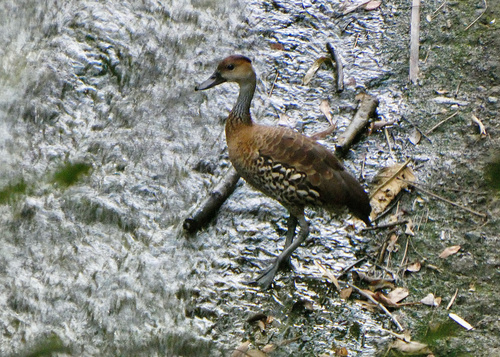
West Indian Whistling-Duck (Dendrocygna arborea) West Indian Whistling-Duck
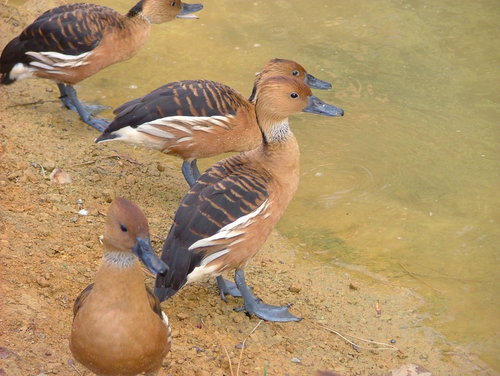
Fulvous Whistling-Duck (Dendrocygna bicolor) Fulvous Whistling-Duck

Media

Loading…

In short

The West Indian Whistling-Duck and Fulvous Whistling-Duck can be distinguished by their plumage and habitat preferences. The West Indian Whistling-Duck is more arboreal and has a darker, more uniformly brown appearance, while the Fulvous Whistling-Duck is more associated with open wetlands and has a distinctive fulvous (tawny) body with contrasting darker wings.

Identification tips

1. Plumage: Look for the uniform dark brown of the West Indian Whistling-Duck versus the fulvous body and dark wings of the Fulvous Whistling-Duck. 2. Habitat: Note the presence of wooded areas for West Indian Whistling-Ducks and open wetlands or rice fields for Fulvous Whistling-Ducks. 3. Behavior: Observe if the duck is perching in trees (West Indian) or foraging in open fields (Fulvous). 4. Vocalization: Listen for the two-noted whistle of the Fulvous Whistling-Duck.

Size

Both species are similar in size, typical of whistling-ducks, with no significant size difference to distinguish them in the field.

Plumage

The West Indian Whistling-Duck has a more uniform dark brown plumage with a slightly paler face and throat, whereas the Fulvous Whistling-Duck features a striking fulvous body with darker wings and a distinctive white band on the upper tail coverts.

Behaviour

West Indian Whistling-Ducks are more likely to be found perching in trees, while Fulvous Whistling-Ducks are often seen in open wetlands and rice fields.

Habitat

West Indian Whistling-Ducks prefer wooded wetlands and are often found in mangroves and coastal lagoons. In contrast, Fulvous Whistling-Ducks are more commonly associated with flooded agricultural fields, especially rice fields, and open wetlands.

Voice

Both species produce whistling calls, but the Fulvous Whistling-Duck's call is typically a two-noted raspy whistle, often heard at night.

Submit a better description

Use the same sections as the comparison. Your text is published immediately.

The West Indian Whistling-Duck and Fulvous Whistling-Duck can be distinguished by their plumage and habitat preferences. The West Indian Whistling-Duck is more arboreal and has a darker, more uniformly brown appearance, while the Fulvous Whistling-Duck is more associated with open wetlands and has a distinctive fulvous (tawny) body with contrasting darker wings.

1. Plumage: Look for the uniform dark brown of the West Indian Whistling-Duck versus the fulvous body and dark wings of the Fulvous Whistling-Duck. 2. Habitat: Note the presence of wooded areas for West Indian Whistling-Ducks and open wetlands or rice fields for Fulvous Whistling-Ducks. 3. Behavior: Observe if the duck is perching in trees (West Indian) or foraging in open fields (Fulvous). 4. Vocalization: Listen for the two-noted whistle of the Fulvous Whistling-Duck.

Both species are similar in size, typical of whistling-ducks, with no significant size difference to distinguish them in the field.

The West Indian Whistling-Duck has a more uniform dark brown plumage with a slightly paler face and throat, whereas the Fulvous Whistling-Duck features a striking fulvous body with darker wings and a distinctive white band on the upper tail coverts.

West Indian Whistling-Ducks are more likely to be found perching in trees, while Fulvous Whistling-Ducks are often seen in open wetlands and rice fields.

West Indian Whistling-Ducks prefer wooded wetlands and are often found in mangroves and coastal lagoons. In contrast, Fulvous Whistling-Ducks are more commonly associated with flooded agricultural fields, especially rice fields, and open wetlands.

Both species produce whistling calls, but the Fulvous Whistling-Duck's call is typically a two-noted raspy whistle, often heard at night.

Discard your changes?

You have unsaved edits. If you leave now, those changes will be lost.

West Indian Whistling-Duck · Fulvous Whistling-Duck · My Tricky Birds