
Birdr

West Indian Whistling-Duck vs Snowy Plover

Dendrocygna arborea versus Anarhynchus nivosus

Play a quiz with West Indian Whistling-Duck and Snowy Plover
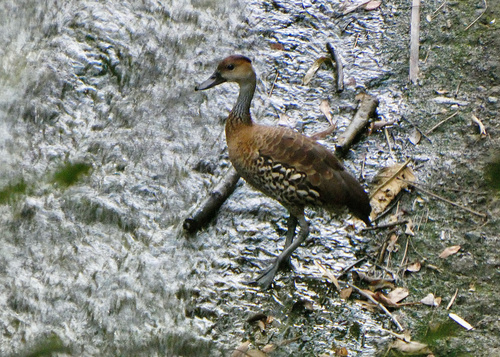
West Indian Whistling-Duck (Dendrocygna arborea) West Indian Whistling-Duck
Snowy Plover (Anarhynchus nivosus) Snowy Plover

Media

Loading…

In short

The West Indian Whistling-Duck and the Snowy Plover are markedly different in appearance and habitat. The duck is a large, dark waterfowl with a distinctive whistling call, while the plover is a small, pale shorebird often found on sandy beaches.

Identification tips

Look for the large size and dark plumage of the West Indian Whistling-Duck compared to the small, pale appearance of the Snowy Plover. Note the habitat: ducks in wetlands, plovers on beaches. Listen for the whistling calls of the duck, which are absent in the plover.

Size

The West Indian Whistling-Duck is significantly larger than the Snowy Plover, with a robust body typical of ducks, whereas the plover is small and compact.

Plumage

The West Indian Whistling-Duck has a dark, mottled plumage with a long neck and a pale face, while the Snowy Plover has a pale, sandy coloration with a distinctive black forehead bar and partial neck collar.

Behaviour

West Indian Whistling-Ducks are often seen in flocks and are more aquatic, while Snowy Plovers are solitary or in small groups, often running along beaches.

Habitat

The duck is found in freshwater wetlands and mangroves, whereas the plover prefers sandy beaches and salt flats.

Voice

The West Indian Whistling-Duck is known for its whistling calls, while the Snowy Plover's calls are more subtle and less distinctive.

Submit a better description

Use the same sections as the comparison. Your text is published immediately.

The West Indian Whistling-Duck and the Snowy Plover are markedly different in appearance and habitat. The duck is a large, dark waterfowl with a distinctive whistling call, while the plover is a small, pale shorebird often found on sandy beaches.

Look for the large size and dark plumage of the West Indian Whistling-Duck compared to the small, pale appearance of the Snowy Plover. Note the habitat: ducks in wetlands, plovers on beaches. Listen for the whistling calls of the duck, which are absent in the plover.

The West Indian Whistling-Duck is significantly larger than the Snowy Plover, with a robust body typical of ducks, whereas the plover is small and compact.

The West Indian Whistling-Duck has a dark, mottled plumage with a long neck and a pale face, while the Snowy Plover has a pale, sandy coloration with a distinctive black forehead bar and partial neck collar.

West Indian Whistling-Ducks are often seen in flocks and are more aquatic, while Snowy Plovers are solitary or in small groups, often running along beaches.

The duck is found in freshwater wetlands and mangroves, whereas the plover prefers sandy beaches and salt flats.

The West Indian Whistling-Duck is known for its whistling calls, while the Snowy Plover's calls are more subtle and less distinctive.

Discard your changes?

You have unsaved edits. If you leave now, those changes will be lost.

West Indian Whistling-Duck · Snowy Plover · My Tricky Birds