Birdr

Western Capercaillie vs Black Grouse

Tetrao urogallus versus Lyrurus tetrix

Play a quiz with Western Capercaillie and Black Grouse
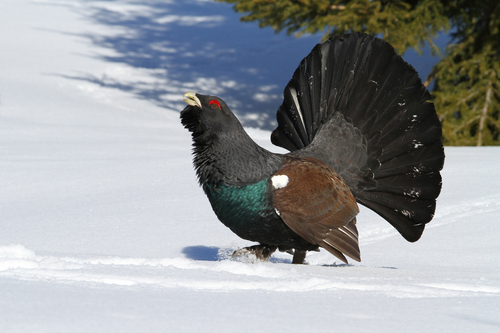
Western Capercaillie (Tetrao urogallus) Western Capercaillie
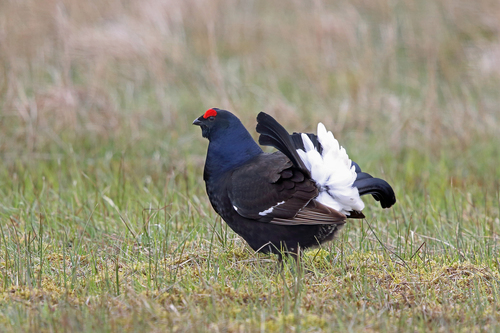
Black Grouse (Lyrurus tetrix) Black Grouse

Media

Loading…

In short

The Western Capercaillie and Black Grouse are both large, ground-dwelling birds found in European forests, but they differ in size and plumage. The Capercaillie is notably larger with a more robust build, while the Black Grouse is smaller and more streamlined. Key differences can be observed in their tail shapes and plumage patterns.

Identification tips

  1. Size and Tail Shape: Look for the larger size and fan-shaped tail of the Capercaillie versus the smaller size and lyre-shaped tail of the Black Grouse. 2. Plumage: Note the iridescent green breast of the male Capercaillie compared to the black plumage with white wing bars of the male Black Grouse. 3. Habitat: Observe the surrounding habitat; dense coniferous forests suggest Capercaillie, while open moorland indicates Black Grouse. 4. Vocalizations: Listen for the Capercaillie's clicking sounds versus the Black Grouse's bubbling calls during display.

Size

The Western Capercaillie is significantly larger than the Black Grouse, with males reaching up to twice the weight of Black Grouse males.

Plumage

Male Western Capercaillies have a dark, iridescent green breast and a long, fan-shaped tail, while Black Grouse males are black with a distinctive lyre-shaped tail and white wing bars. Females of both species are cryptically colored but the Capercaillie female is larger and more robust.

Behaviour

Both species display on leks, but the Capercaillie's display is more solitary and involves a unique 'clicking' sound, whereas Black Grouse males gather in groups and perform a bubbling call.

Habitat

Western Capercaillies prefer dense coniferous forests, particularly those with Scots pine and spruce, while Black Grouse are found in more open moorland and mixed woodland areas.

Voice

The Western Capercaillie has a distinctive clicking and popping display call, whereas the Black Grouse's call is a bubbling sound, often heard during lekking displays.

Submit a better description

Use the same sections as the comparison. Your text is published immediately.

The Western Capercaillie and Black Grouse are both large, ground-dwelling birds found in European forests, but they differ in size and plumage. The Capercaillie is notably larger with a more robust build, while the Black Grouse is smaller and more streamlined. Key differences can be observed in their tail shapes and plumage patterns.

  1. Size and Tail Shape: Look for the larger size and fan-shaped tail of the Capercaillie versus the smaller size and lyre-shaped tail of the Black Grouse. 2. Plumage: Note the iridescent green breast of the male Capercaillie compared to the black plumage with white wing bars of the male Black Grouse. 3. Habitat: Observe the surrounding habitat; dense coniferous forests suggest Capercaillie, while open moorland indicates Black Grouse. 4. Vocalizations: Listen for the Capercaillie's clicking sounds versus the Black Grouse's bubbling calls during display.

The Western Capercaillie is significantly larger than the Black Grouse, with males reaching up to twice the weight of Black Grouse males.

Male Western Capercaillies have a dark, iridescent green breast and a long, fan-shaped tail, while Black Grouse males are black with a distinctive lyre-shaped tail and white wing bars. Females of both species are cryptically colored but the Capercaillie female is larger and more robust.

Both species display on leks, but the Capercaillie's display is more solitary and involves a unique 'clicking' sound, whereas Black Grouse males gather in groups and perform a bubbling call.

Western Capercaillies prefer dense coniferous forests, particularly those with Scots pine and spruce, while Black Grouse are found in more open moorland and mixed woodland areas.

The Western Capercaillie has a distinctive clicking and popping display call, whereas the Black Grouse's call is a bubbling sound, often heard during lekking displays.

Discard your changes?

You have unsaved edits. If you leave now, those changes will be lost.

Western Capercaillie · Black Grouse · My Tricky Birds