Western Capercaillie vs Grey Partridge
Tetrao urogallus versus Perdix perdix
Play a quiz with Western Capercaillie and Grey Partridge
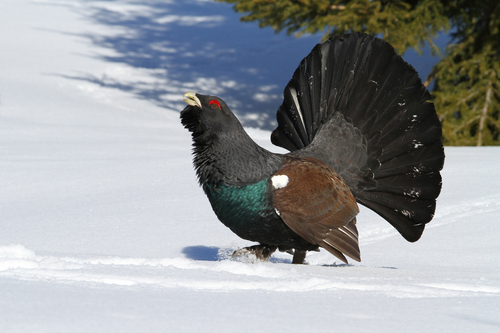
Western Capercaillie
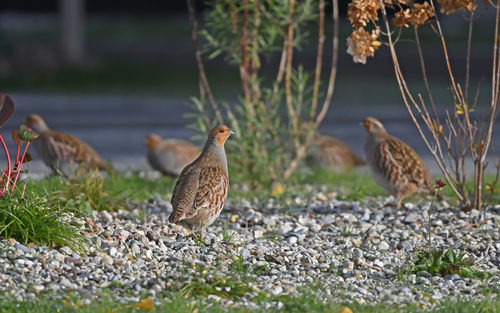
Grey Partridge
In short
The Western Capercaillie and Grey Partridge are both members of the Phasianidae family, but they differ significantly in size and habitat preference. The Capercaillie is much larger and prefers coniferous forests, while the Grey Partridge is smaller and found in open farmlands and grasslands.
Identification tips
Size and habitat are the most reliable field marks: look for the much larger size and forest habitat of the Capercaillie versus the smaller size and open fields of the Partridge. Plumage differences are also notable: the Capercaillie male's dark, iridescent plumage contrasts with the Partridge's greyish-brown and orange face. Behavior can help: Capercaillies are more solitary, while Partridges are often in groups.
Size
The Western Capercaillie is significantly larger, with males reaching up to 100 cm in length, compared to the Grey Partridge, which is about 30 cm long.
Plumage
Male Western Capercaillies have dark plumage with iridescent green or blue on the breast, while females are mottled brown. Grey Partridges are generally greyish-brown with a distinctive orange face and throat, and both sexes look similar.
Behaviour
Western Capercaillies are solitary or found in small groups and are known for their elaborate courtship displays. Grey Partridges are more social, often seen in coveys, especially outside the breeding season.
Habitat
Western Capercaillies inhabit dense coniferous forests, particularly in northern Europe and Russia. Grey Partridges prefer open habitats like farmlands, grasslands, and heathlands across Europe.
Voice
The Western Capercaillie has a distinctive, complex display call during the breeding season, while the Grey Partridge has a simple, repetitive 'kee-kee-kee' call.