Birdr

Western Flycatcher vs Black Phoebe

Empidonax difficilis versus Sayornis nigricans

Play a quiz with Western Flycatcher and Black Phoebe
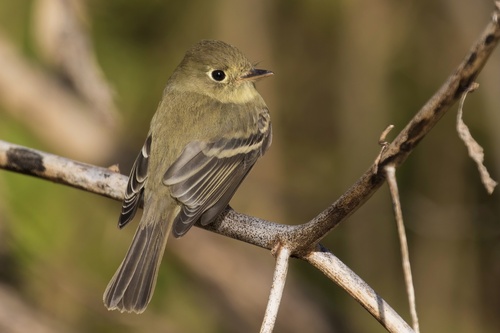
Western Flycatcher (Empidonax difficilis) Western Flycatcher
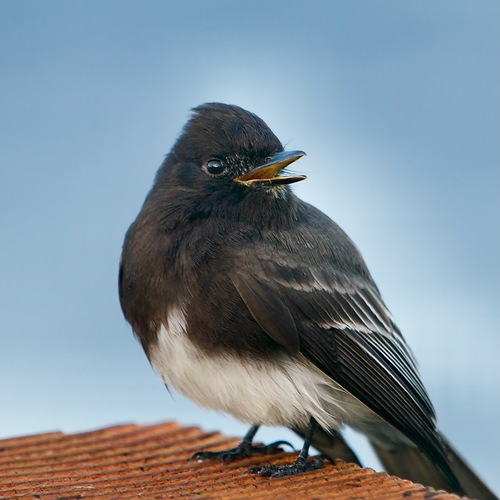
Black Phoebe (Sayornis nigricans) Black Phoebe

Media

Loading…

In short

The Western Flycatcher and Black Phoebe can be distinguished by their structure and behavior. The Western Flycatcher has a more delicate build with a prominent eye-ring, while the Black Phoebe is stockier with a distinctive black-and-white plumage. Their habitats and behaviors also differ significantly.

Identification tips

1. Structure: Look for the slender build and eye-ring of the Western Flycatcher versus the stocky, black-and-white appearance of the Black Phoebe. 2. Habitat: Note the presence of water and human structures for Black Phoebes. 3. Behavior: Observe perching habits; Black Phoebes perch openly, while Western Flycatchers are more concealed. 4. Vocalization: Listen for the Black Phoebe's sharp 'tsip' call.

Size

The Western Flycatcher is smaller and more delicate compared to the larger, stockier Black Phoebe.

Plumage

Western Flycatchers have a greenish-olive upperpart with a yellowish belly and a distinct eye-ring. Black Phoebes are mostly black with a contrasting white belly and undertail coverts.

Behaviour

Western Flycatchers are more likely to be seen flitting through foliage, while Black Phoebes often perch conspicuously near water, sallying out for insects.

Habitat

Western Flycatchers prefer forested areas, often in cooler mountain ranges, while Black Phoebes are commonly found near water sources, including urban areas with artificial structures.

Voice

Western Flycatcher vocalizations are variable and not reliable for identification. Black Phoebes have a distinct, sharp 'tsip' call.

Submit a better description

Use the same sections as the comparison. Your text is published immediately.

The Western Flycatcher and Black Phoebe can be distinguished by their structure and behavior. The Western Flycatcher has a more delicate build with a prominent eye-ring, while the Black Phoebe is stockier with a distinctive black-and-white plumage. Their habitats and behaviors also differ significantly.

1. Structure: Look for the slender build and eye-ring of the Western Flycatcher versus the stocky, black-and-white appearance of the Black Phoebe. 2. Habitat: Note the presence of water and human structures for Black Phoebes. 3. Behavior: Observe perching habits; Black Phoebes perch openly, while Western Flycatchers are more concealed. 4. Vocalization: Listen for the Black Phoebe's sharp 'tsip' call.

The Western Flycatcher is smaller and more delicate compared to the larger, stockier Black Phoebe.

Western Flycatchers have a greenish-olive upperpart with a yellowish belly and a distinct eye-ring. Black Phoebes are mostly black with a contrasting white belly and undertail coverts.

Western Flycatchers are more likely to be seen flitting through foliage, while Black Phoebes often perch conspicuously near water, sallying out for insects.

Western Flycatchers prefer forested areas, often in cooler mountain ranges, while Black Phoebes are commonly found near water sources, including urban areas with artificial structures.

Western Flycatcher vocalizations are variable and not reliable for identification. Black Phoebes have a distinct, sharp 'tsip' call.

Discard your changes?

You have unsaved edits. If you leave now, those changes will be lost.

Western Flycatcher · Black Phoebe · My Tricky Birds