Birdr

Western Grebe vs Limpkin

Aechmophorus occidentalis versus Aramus guarauna

Play a quiz with Western Grebe and Limpkin
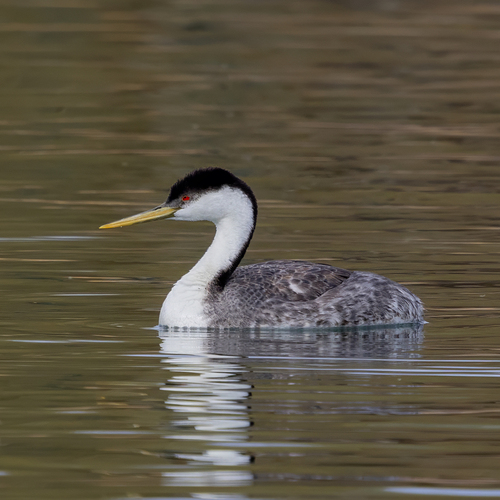
Western Grebe (Aechmophorus occidentalis) Western Grebe
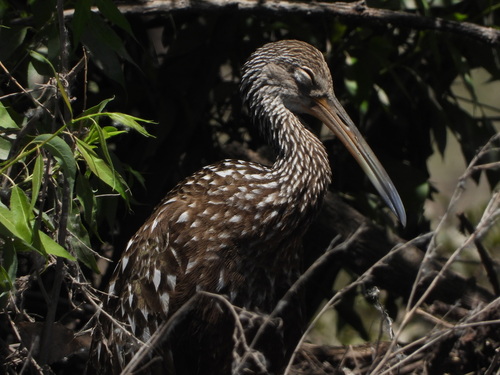
Limpkin (Aramus guarauna) Limpkin

Media

Loading…

In short

The Western Grebe and Limpkin are distinct in both appearance and habitat preferences. The Western Grebe is a waterbird with a slender neck and striking black-and-white plumage, while the Limpkin is a wader with a brown, speckled appearance and a long, slightly curved bill. These species are not closely related and are unlikely to be confused in the field.

Identification tips

1. Look for the Western Grebe's black cap and white face; the black extends below the eye. 2. Note the Limpkin's brown, speckled plumage and long, slightly curved bill. 3. Observe behavior: Western Grebes dive for fish, Limpkins forage for snails. 4. Listen for the Limpkin's loud, wailing call, especially at dawn or dusk.

Size

The Western Grebe is larger and more elongated, with a long neck and body, whereas the Limpkin is more compact with a shorter neck.

Plumage

Western Grebes have a bold black-and-white contrast with a black cap extending below the eye, while Limpkins are brown with white speckles and lack the stark contrast.

Behaviour

Western Grebes are often seen swimming and diving in open water, while Limpkins are typically found walking on the ground or wading in shallow water, often foraging for snails.

Habitat

Western Grebes inhabit large freshwater lakes and marshes, whereas Limpkins are found in marshes and swamps, particularly in areas with abundant apple snails.

Voice

Western Grebes are generally silent, with occasional trills during courtship, while Limpkins have a distinctive, loud, and wailing call that is often heard at dawn and dusk.

Submit a better description

Use the same sections as the comparison. Your text is published immediately.

The Western Grebe and Limpkin are distinct in both appearance and habitat preferences. The Western Grebe is a waterbird with a slender neck and striking black-and-white plumage, while the Limpkin is a wader with a brown, speckled appearance and a long, slightly curved bill. These species are not closely related and are unlikely to be confused in the field.

1. Look for the Western Grebe's black cap and white face; the black extends below the eye. 2. Note the Limpkin's brown, speckled plumage and long, slightly curved bill. 3. Observe behavior: Western Grebes dive for fish, Limpkins forage for snails. 4. Listen for the Limpkin's loud, wailing call, especially at dawn or dusk.

The Western Grebe is larger and more elongated, with a long neck and body, whereas the Limpkin is more compact with a shorter neck.

Western Grebes have a bold black-and-white contrast with a black cap extending below the eye, while Limpkins are brown with white speckles and lack the stark contrast.

Western Grebes are often seen swimming and diving in open water, while Limpkins are typically found walking on the ground or wading in shallow water, often foraging for snails.

Western Grebes inhabit large freshwater lakes and marshes, whereas Limpkins are found in marshes and swamps, particularly in areas with abundant apple snails.

Western Grebes are generally silent, with occasional trills during courtship, while Limpkins have a distinctive, loud, and wailing call that is often heard at dawn and dusk.

Discard your changes?

You have unsaved edits. If you leave now, those changes will be lost.

Western Grebe · Limpkin · My Tricky Birds