
Western Gull vs Herring Gull
Larus occidentalis versus Larus argentatus
Play a quiz with Western Gull and Herring Gull
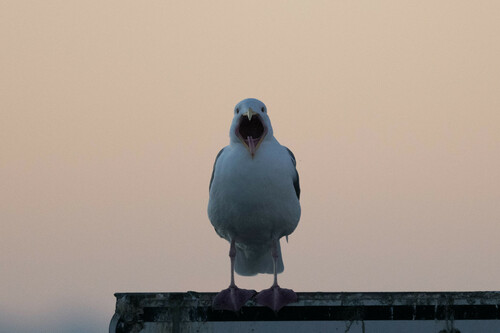
Western Gull
Herring Gull
In short
Western Gulls and Herring Gulls can be challenging to differentiate, but key differences in bill color and leg color are useful. Western Gulls have a darker mantle and pink legs, while Herring Gulls have a lighter mantle and pink legs as well. Both species are large gulls with similar overall structure.
Identification tips
- Bill color: Western Gulls have a yellow bill with a red spot, while Herring Gulls have a similar bill but may show more variability in color.
- Leg color: Both species have pink legs, but this is not a distinguishing feature.
- Mantle color: Western Gulls have a darker gray mantle compared to the lighter gray of Herring Gulls.
- Range: Consider geographic location; Western Gulls are primarily on the Pacific coast, while Herring Gulls are more widespread.
Size
Both species are large gulls, but the Western Gull is slightly bulkier with a heavier bill.
Plumage
Western Gulls have a darker gray mantle compared to the lighter gray mantle of Herring Gulls. Both have white heads and underparts, but Western Gulls may show more streaking on the head in non-breeding plumage.
Behaviour
Both species exhibit similar behaviors, often seen scavenging or foraging in coastal areas. Western Gulls are more restricted to the Pacific coast, while Herring Gulls are more widespread.
Habitat
Western Gulls are typically found along the Pacific coast, often nesting on islands and offshore rocks. Herring Gulls have a broader range, found across North America in coastal and inland areas.
Voice
Both species have similar vocalizations, with loud, raucous calls typical of large gulls. Specific call differences are subtle and not easily distinguished in the field.