Western Marsh Harrier vs Black Harrier
Circus aeruginosus versus Circus maurus
Play a quiz with Western Marsh Harrier and Black Harrier

Western Marsh Harrier
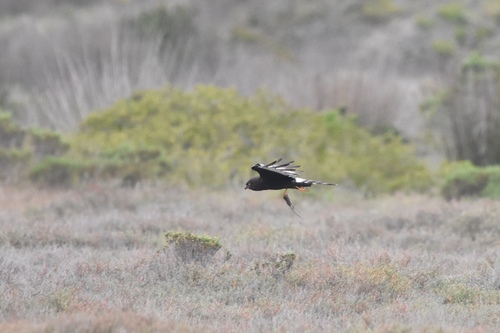
Black Harrier
In short
The Western Marsh Harrier and Black Harrier are both medium-sized raptors, but they can be distinguished by plumage and habitat preferences. The Western Marsh Harrier typically has a more varied plumage with browns and yellows, while the Black Harrier is predominantly black with white markings. Habitat can also be a clue, as the Western Marsh Harrier is more widespread across wetlands, whereas the Black Harrier is often found in open grasslands.
Identification tips
1. Plumage: Look for the predominantly black plumage with white markings on the Black Harrier, versus the more varied brown and yellow tones of the Western Marsh Harrier. 2. Habitat: Consider the habitat; Western Marsh Harriers are more likely in wetlands, while Black Harriers prefer open grasslands. 3. Tail and Wing Patterns: Note the greyish tail and wings of male Western Marsh Harriers compared to the uniform black and white of the Black Harrier.
Size
Both species are similar in size, but the Western Marsh Harrier is generally slightly larger and bulkier.
Plumage
The Western Marsh Harrier displays a mix of brown, yellow, and cream colors, with males having a distinctive greyish tail and wings. In contrast, the Black Harrier is predominantly black with striking white underparts and a white rump, making it more uniform in appearance.
Behaviour
Both species exhibit similar hunting behaviors, gliding low over open areas in search of prey. However, the Black Harrier may be more likely to be seen in open grasslands, while the Western Marsh Harrier is often associated with wetlands.
Habitat
The Western Marsh Harrier is typically found in wetlands, marshes, and reedbeds, while the Black Harrier prefers open grasslands and fynbos in southern Africa.
Voice
Vocalizations are not a primary distinguishing feature in the field, as both species are relatively silent and vocalizations are rarely heard.