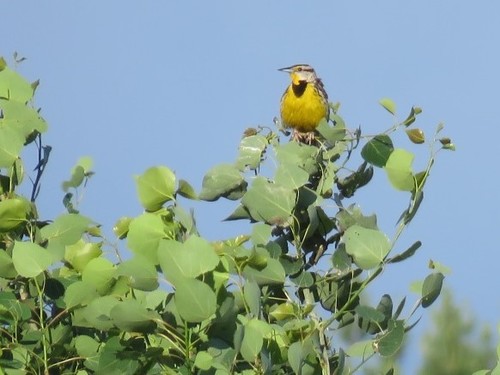
Western Meadowlark vs Eastern Meadowlark
Sturnella neglecta versus Sturnella magna
Play a quiz with Western Meadowlark and Eastern Meadowlark
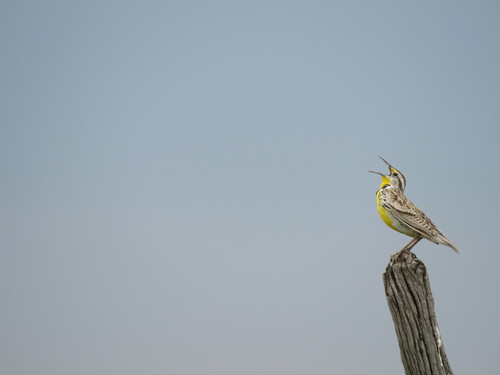
Western Meadowlark
Eastern Meadowlark
In short
Western and Eastern Meadowlarks are similar in appearance, but can be distinguished by their vocalizations and subtle plumage differences. The Western Meadowlark has a more melodious song and distinct white tail margins, while the Eastern Meadowlark's song is simpler and more repetitive.
Identification tips
- Listen for song: Western Meadowlark has a melodious, flute-like song; Eastern Meadowlark's song is simpler.
- Check tail margins: Western Meadowlark has more pronounced white tail margins.
- Consider location: Western Meadowlark is more common in the western U.S., Eastern Meadowlark in the east.
- Observe behavior: Both forage on the ground in open fields, but vocalizations are key for identification.
Size
Both species are similar in size, with no significant differences in structure or proportions.
Plumage
Both have a yellow breast with a black V-shaped bib, but the Western Meadowlark typically has more pronounced white tail margins. Plumage coloration can be variable and is not a reliable field mark on its own.
Behaviour
Both species exhibit similar behaviors, often seen foraging on the ground in open fields. They are territorial and show little evidence of interbreeding where their ranges overlap.
Habitat
Western Meadowlarks are found in open grasslands from the Great Plains to the Pacific coast, while Eastern Meadowlarks prefer similar habitats but are more common east of the Mississippi River.
Voice
The Western Meadowlark's song is more melodious and flute-like, while the Eastern Meadowlark's song is simpler and more repetitive. Vocalizations are the most reliable way to distinguish these species.