
Birdr

Western Spindalis vs Bobolink

Spindalis zena versus Dolichonyx oryzivorus

Play a quiz with Western Spindalis and Bobolink
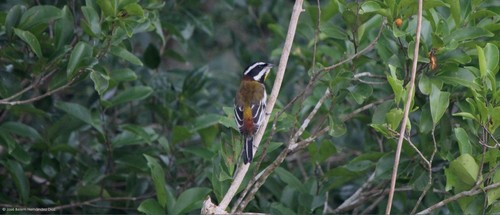
Western Spindalis (Spindalis zena) Western Spindalis
Bobolink (Dolichonyx oryzivorus) Bobolink

Media

Loading…

In short

Western Spindalis and Bobolink are quite distinct in appearance and behavior. The Western Spindalis is a colorful resident of the Greater Antilles, while the Bobolink is a migratory bird known for its striking breeding plumage and long-distance travel. Observing their plumage and behavior will quickly help differentiate these two species.

Identification tips

1. Look for the distinctive head pattern of the Western Spindalis, especially in males. 2. Note the buffy nape and tuxedo-like appearance of breeding male Bobolinks. 3. Observe behavior: Bobolinks are more likely to be seen in open fields, often singing in flight. 4. Consider location and habitat: Western Spindalis are found in the Greater Antilles, while Bobolinks are migrants across North America.

Size

Bobolinks are generally larger than Western Spindalis, with a more robust build.

Plumage

Western Spindalis males have a striking combination of black, white, and orange, with a distinctive black-and-white head pattern. Females are duller but still show a distinctive pattern. In contrast, breeding male Bobolinks have a unique black-and-white plumage with a buffy nape, resembling a tuxedo worn backward. Nonbreeding males and females are more brownish with streaking.

Behaviour

Bobolinks are known for their distinctive, bubbly song and characteristic helicopter-like flight during the breeding season. Western Spindalis are more sedentary, often seen foraging in trees and shrubs.

Habitat

Western Spindalis are typically found in the Greater Antilles, favoring forested and shrubby areas. Bobolinks breed in North American grasslands and migrate to South America, often seen in open fields and meadows.

Voice

Bobolinks have a long, bubbly song, often delivered in flight. Western Spindalis have a simpler song and call, more typical of tanagers.

Submit a better description

Use the same sections as the comparison. Your text is published immediately.

Western Spindalis and Bobolink are quite distinct in appearance and behavior. The Western Spindalis is a colorful resident of the Greater Antilles, while the Bobolink is a migratory bird known for its striking breeding plumage and long-distance travel. Observing their plumage and behavior will quickly help differentiate these two species.

1. Look for the distinctive head pattern of the Western Spindalis, especially in males. 2. Note the buffy nape and tuxedo-like appearance of breeding male Bobolinks. 3. Observe behavior: Bobolinks are more likely to be seen in open fields, often singing in flight. 4. Consider location and habitat: Western Spindalis are found in the Greater Antilles, while Bobolinks are migrants across North America.

Bobolinks are generally larger than Western Spindalis, with a more robust build.

Western Spindalis males have a striking combination of black, white, and orange, with a distinctive black-and-white head pattern. Females are duller but still show a distinctive pattern. In contrast, breeding male Bobolinks have a unique black-and-white plumage with a buffy nape, resembling a tuxedo worn backward. Nonbreeding males and females are more brownish with streaking.

Bobolinks are known for their distinctive, bubbly song and characteristic helicopter-like flight during the breeding season. Western Spindalis are more sedentary, often seen foraging in trees and shrubs.

Western Spindalis are typically found in the Greater Antilles, favoring forested and shrubby areas. Bobolinks breed in North American grasslands and migrate to South America, often seen in open fields and meadows.

Bobolinks have a long, bubbly song, often delivered in flight. Western Spindalis have a simpler song and call, more typical of tanagers.

Discard your changes?

You have unsaved edits. If you leave now, those changes will be lost.

Western Spindalis · Bobolink · My Tricky Birds