Birdr

Western Subalpine Warbler vs Marmora's Warbler

Curruca iberiae versus Curruca sarda

Play a quiz with Western Subalpine Warbler and Marmora's Warbler
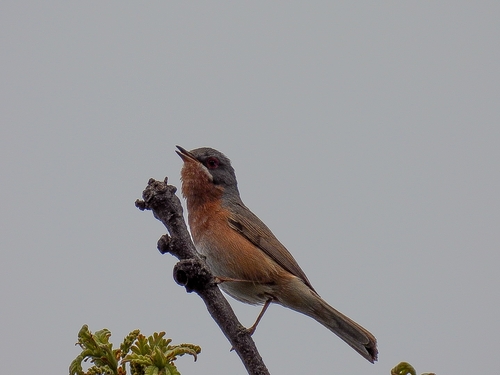
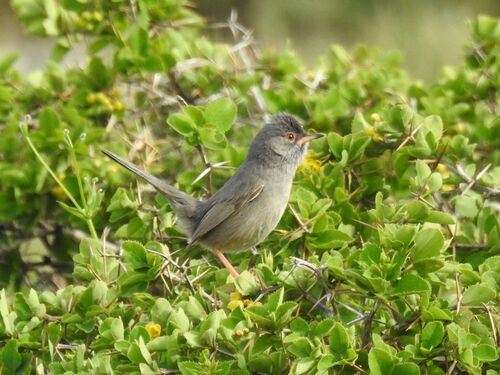
Western Subalpine Warbler (Curruca iberiae) Western Subalpine Warbler
Marmora's Warbler (Curruca sarda) Marmora's Warbler

Media

Loading…

In short

The Western Subalpine Warbler (Curruca iberiae) and Marmora's Warbler (Curruca sarda) are both small, sylviid warblers that can be challenging to differentiate. The Western Subalpine Warbler typically has a more colorful plumage with distinct facial markings, while Marmora's Warbler is generally more uniform and darker. Observing their behavior and habitat can also aid in identification.

Identification tips

  1. Plumage: Look for the Western Subalpine Warbler's white throat and reddish-brown breast in males. 2. Habitat: Note the environment; Marmora's Warbler is more likely in rocky, coastal areas. 3. Vocalizations: Listen for the song differences; Western Subalpine Warbler has a faster, scratchy warble. 4. Behavior: Observe the skulking nature of Marmora's Warbler compared to the more active Western Subalpine Warbler.

Size

Both species are similar in size, small and agile, typical of sylviid warblers.

Plumage

Western Subalpine Warbler often shows a more colorful plumage with a noticeable white throat and a contrasting reddish-brown breast in males, while females and immatures are duller. Marmora's Warbler is more uniformly dark grey with less contrast, lacking the bright throat and breast colors.

Behaviour

Both species exhibit similar behavior, being active and often seen flitting through low vegetation. However, Marmora's Warbler may appear more skulking and less conspicuous.

Habitat

Western Subalpine Warbler is typically found in open woodlands and scrubby areas, often at higher elevations during breeding. Marmora's Warbler prefers more open, rocky, and coastal habitats, often with low shrubs.

Voice

Western Subalpine Warbler's song is a fast, scratchy warble, while Marmora's Warbler has a more subdued, buzzing song. Calls can be difficult to distinguish without experience.

Submit a better description

Use the same sections as the comparison. Your text is published immediately.

The Western Subalpine Warbler (Curruca iberiae) and Marmora's Warbler (Curruca sarda) are both small, sylviid warblers that can be challenging to differentiate. The Western Subalpine Warbler typically has a more colorful plumage with distinct facial markings, while Marmora's Warbler is generally more uniform and darker. Observing their behavior and habitat can also aid in identification.

  1. Plumage: Look for the Western Subalpine Warbler's white throat and reddish-brown breast in males. 2. Habitat: Note the environment; Marmora's Warbler is more likely in rocky, coastal areas. 3. Vocalizations: Listen for the song differences; Western Subalpine Warbler has a faster, scratchy warble. 4. Behavior: Observe the skulking nature of Marmora's Warbler compared to the more active Western Subalpine Warbler.

Both species are similar in size, small and agile, typical of sylviid warblers.

Western Subalpine Warbler often shows a more colorful plumage with a noticeable white throat and a contrasting reddish-brown breast in males, while females and immatures are duller. Marmora's Warbler is more uniformly dark grey with less contrast, lacking the bright throat and breast colors.

Both species exhibit similar behavior, being active and often seen flitting through low vegetation. However, Marmora's Warbler may appear more skulking and less conspicuous.

Western Subalpine Warbler is typically found in open woodlands and scrubby areas, often at higher elevations during breeding. Marmora's Warbler prefers more open, rocky, and coastal habitats, often with low shrubs.

Western Subalpine Warbler's song is a fast, scratchy warble, while Marmora's Warbler has a more subdued, buzzing song. Calls can be difficult to distinguish without experience.

Discard your changes?

You have unsaved edits. If you leave now, those changes will be lost.

Western Subalpine Warbler · Marmora's Warbler · My Tricky Birds