Birdr

Western Swamphen vs Little Crake

Porphyrio porphyrio versus Zapornia parva

Play a quiz with Western Swamphen and Little Crake
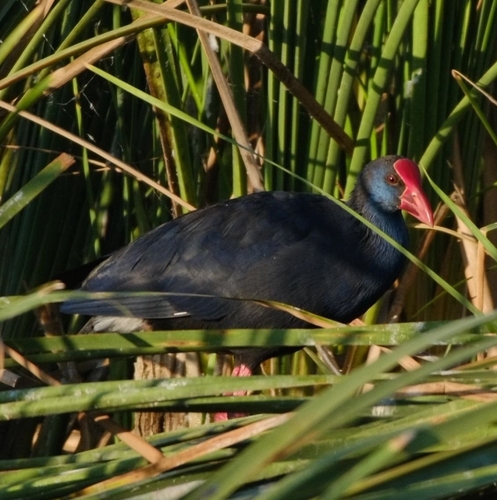
Western Swamphen (Porphyrio porphyrio) Western Swamphen
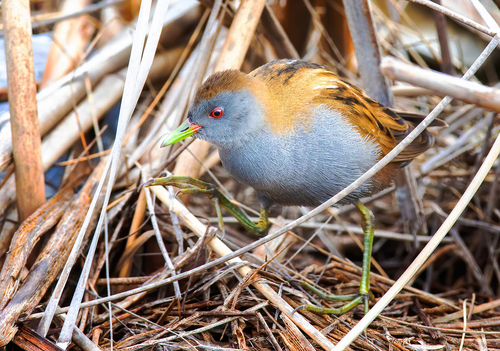
Little Crake (Zapornia parva) Little Crake

Media

Loading…

In short

The Western Swamphen is significantly larger and bulkier than the Little Crake, with a robust red bill and frontal shield. In contrast, the Little Crake is small and slender, with a more delicate bill. Both species are found in wetland habitats, but their size and structure are the most reliable field marks.

Identification tips

  1. Size and Structure: Western Swamphen is much larger and bulkier. 2. Bill and Frontal Shield: Look for the red bill and frontal shield of the Swamphen. 3. Plumage: Note the vibrant blue-purple of the Swamphen versus the brown and grey of the Crake. 4. Behavior: Swamphens are more likely to be seen in the open. 5. Habitat: Observe the type of wetland; Swamphens prefer open areas, Crakes dense reeds.

Size

The Western Swamphen is much larger, comparable to a chicken, while the Little Crake is small and sparrow-sized.

Plumage

The Western Swamphen has a striking blue-purple plumage with a red bill and frontal shield. The Little Crake is more subdued, with brown upperparts and a greyish face and underparts.

Behaviour

Western Swamphens are often seen walking in open marshes and are less secretive, while Little Crakes are more elusive and tend to skulk in dense vegetation.

Habitat

Both species inhabit wetlands, but the Western Swamphen prefers more open marshes and reed beds, whereas the Little Crake is often found in dense, reedy areas.

Voice

Western Swamphens have loud, harsh calls, while Little Crakes produce softer, more subtle vocalizations.

Submit a better description

Use the same sections as the comparison. Your text is published immediately.

The Western Swamphen is significantly larger and bulkier than the Little Crake, with a robust red bill and frontal shield. In contrast, the Little Crake is small and slender, with a more delicate bill. Both species are found in wetland habitats, but their size and structure are the most reliable field marks.

  1. Size and Structure: Western Swamphen is much larger and bulkier. 2. Bill and Frontal Shield: Look for the red bill and frontal shield of the Swamphen. 3. Plumage: Note the vibrant blue-purple of the Swamphen versus the brown and grey of the Crake. 4. Behavior: Swamphens are more likely to be seen in the open. 5. Habitat: Observe the type of wetland; Swamphens prefer open areas, Crakes dense reeds.

The Western Swamphen is much larger, comparable to a chicken, while the Little Crake is small and sparrow-sized.

The Western Swamphen has a striking blue-purple plumage with a red bill and frontal shield. The Little Crake is more subdued, with brown upperparts and a greyish face and underparts.

Western Swamphens are often seen walking in open marshes and are less secretive, while Little Crakes are more elusive and tend to skulk in dense vegetation.

Both species inhabit wetlands, but the Western Swamphen prefers more open marshes and reed beds, whereas the Little Crake is often found in dense, reedy areas.

Western Swamphens have loud, harsh calls, while Little Crakes produce softer, more subtle vocalizations.

Discard your changes?

You have unsaved edits. If you leave now, those changes will be lost.

Western Swamphen · Little Crake · My Tricky Birds