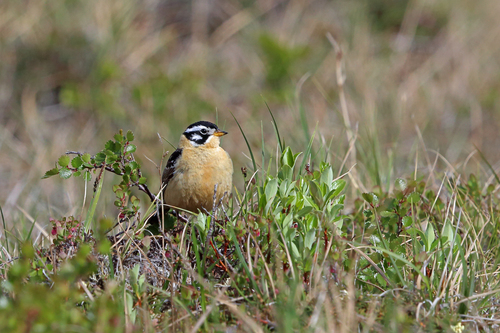
Western Wood-Pewee vs Smith's Longspur
Contopus sordidulus versus Calcarius pictus
Play a quiz with Western Wood-Pewee and Smith's Longspur
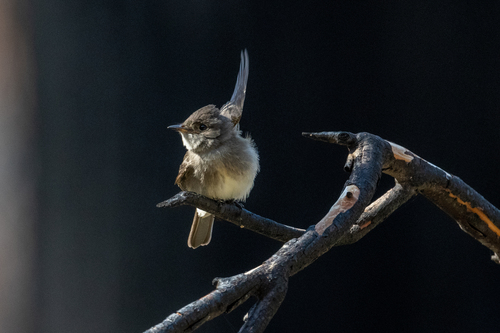
Western Wood-Pewee
Smith's Longspur
In short
Western Wood-Pewee and Smith's Longspur are distinct in both appearance and behavior, with the former being a flycatcher and the latter a ground-dwelling songbird. The most reliable field mark is their habitat preference: Western Wood-Pewee is often seen perched in trees, while Smith's Longspur is found in open fields. Vocalizations are also a key differentiator, especially in overlapping ranges.
Identification tips
- Habitat: Check if the bird is in a tree or on the ground.
- Vocalization: Listen for the pewee's 'pee-a-wee' call.
- Plumage: Look for the pewee's plain grayish tones versus the longspur's chestnut nape and white tail edges.
- Behavior: Note if the bird is flycatching or foraging on the ground.
Size
Western Wood-Pewee is a small flycatcher, while Smith's Longspur is a sparrow-sized bird.
Plumage
Western Wood-Pewee is generally grayish-brown with indistinct wing bars and lacks the bold patterns of Smith's Longspur, which has a more striking plumage with a chestnut nape and white outer tail feathers.
Behaviour
Western Wood-Pewee is a sit-and-wait predator, often seen sallying from perches to catch insects. In contrast, Smith's Longspur is more terrestrial, often seen foraging on the ground.
Habitat
Western Wood-Pewee is found in wooded areas, especially in open forests and edges, while Smith's Longspur prefers open grasslands and tundra.
Voice
Western Wood-Pewee has a distinctive, plaintive 'pee-a-wee' call, which is a key identifier. Smith's Longspur's song is a series of musical warbles, quite different from the pewee's calls.