Birdr

Whimbrel vs Bar-tailed Godwit

Numenius phaeopus versus Limosa lapponica

Play a quiz with Whimbrel and Bar-tailed Godwit
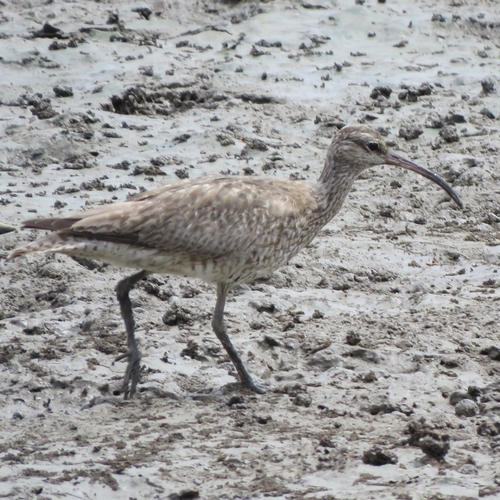
Whimbrel (Numenius phaeopus) Whimbrel
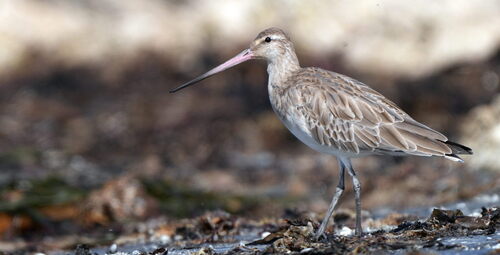
Bar-tailed Godwit (Limosa lapponica) Bar-tailed Godwit

Media

Loading…

In short

The Whimbrel and Bar-tailed Godwit can be differentiated by their bill shape and length: the Whimbrel has a distinctly down-curved bill, while the Bar-tailed Godwit has a straighter, slightly upturned bill. Both species are large shorebirds, but the Whimbrel's bold head pattern with a prominent dark eye stripe is a key distinguishing feature.

Identification tips

1. Bill Shape: Look for the Whimbrel's down-curved bill versus the Bar-tailed Godwit's straighter bill. 2. Head Pattern: Note the Whimbrel's bold dark eye stripe and crown stripe. 3. Plumage: In breeding season, check for the Bar-tailed Godwit's reddish underparts. 4. Habitat: Consider the Whimbrel's presence in upland areas during migration. 5. Call: Listen for the Whimbrel's rapid 'pip-pip-pip' call.

Size

Both species are similar in size, but the Bar-tailed Godwit is slightly larger and more robust.

Plumage

The Whimbrel has a distinctive head pattern with a dark eye stripe and crown stripe, while the Bar-tailed Godwit lacks these bold head markings and has a more uniform appearance. The Bar-tailed Godwit in breeding plumage shows a rich, reddish-brown color on the underparts, which the Whimbrel does not.

Behaviour

Both species are often seen in flocks during migration and at feeding grounds, but the Bar-tailed Godwit is known for its long-distance migrations, often in large flocks.

Habitat

Both species frequent coastal mudflats and estuaries, but the Whimbrel is also commonly found in upland areas during migration.

Voice

The Whimbrel's call is a distinctive, rapid 'pip-pip-pip' or 'tittering' sound, while the Bar-tailed Godwit has a more subdued and less frequent call.

Submit a better description

Use the same sections as the comparison. Your text is published immediately.

The Whimbrel and Bar-tailed Godwit can be differentiated by their bill shape and length: the Whimbrel has a distinctly down-curved bill, while the Bar-tailed Godwit has a straighter, slightly upturned bill. Both species are large shorebirds, but the Whimbrel's bold head pattern with a prominent dark eye stripe is a key distinguishing feature.

1. Bill Shape: Look for the Whimbrel's down-curved bill versus the Bar-tailed Godwit's straighter bill. 2. Head Pattern: Note the Whimbrel's bold dark eye stripe and crown stripe. 3. Plumage: In breeding season, check for the Bar-tailed Godwit's reddish underparts. 4. Habitat: Consider the Whimbrel's presence in upland areas during migration. 5. Call: Listen for the Whimbrel's rapid 'pip-pip-pip' call.

Both species are similar in size, but the Bar-tailed Godwit is slightly larger and more robust.

The Whimbrel has a distinctive head pattern with a dark eye stripe and crown stripe, while the Bar-tailed Godwit lacks these bold head markings and has a more uniform appearance. The Bar-tailed Godwit in breeding plumage shows a rich, reddish-brown color on the underparts, which the Whimbrel does not.

Both species are often seen in flocks during migration and at feeding grounds, but the Bar-tailed Godwit is known for its long-distance migrations, often in large flocks.

Both species frequent coastal mudflats and estuaries, but the Whimbrel is also commonly found in upland areas during migration.

The Whimbrel's call is a distinctive, rapid 'pip-pip-pip' or 'tittering' sound, while the Bar-tailed Godwit has a more subdued and less frequent call.

Discard your changes?

You have unsaved edits. If you leave now, those changes will be lost.

Whimbrel · Bar-tailed Godwit · My Tricky Birds