Birdr

Whimbrel vs Little Whimbrel

Numenius phaeopus versus Numenius minutus

Play a quiz with Whimbrel and Little Whimbrel
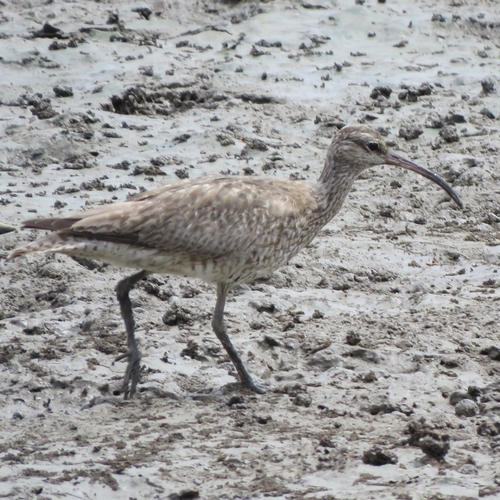
Whimbrel (Numenius phaeopus) Whimbrel
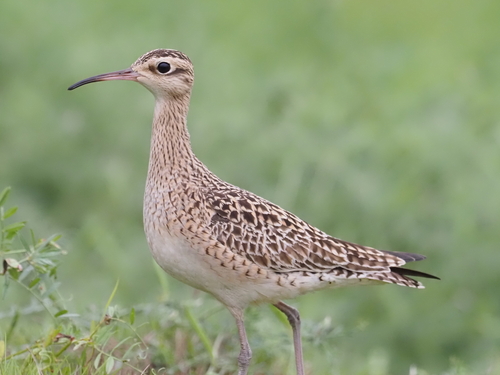
Little Whimbrel (Numenius minutus) Little Whimbrel

Media

Loading…

In short

The Whimbrel and Little Whimbrel are both curlews but differ significantly in size and bill shape. The Whimbrel is larger with a distinctively long, decurved bill, while the Little Whimbrel is smaller with a shorter, straighter bill. These differences are most noticeable when seen together or with other shorebirds for scale.

Identification tips

  1. Size and Bill Shape: Look for the larger size and long, decurved bill of the Whimbrel compared to the smaller, straighter-billed Little Whimbrel. 2. Habitat: Note the habitat; Whimbrels are more coastal, while Little Whimbrels are often inland during migration. 3. Vocalizations: Listen for the Whimbrel's loud whistles, which are more distinctive than the Little Whimbrel's calls.

Size

The Whimbrel is notably larger than the Little Whimbrel, which is more compact and similar in size to a small sandpiper.

Plumage

Both species have similar brown and white plumage with streaked patterns, but the Whimbrel often shows a more pronounced dark crown stripe and a paler supercilium.

Behaviour

Whimbrels are often seen probing in mudflats or coastal areas, while Little Whimbrels may be observed in grassy fields or open areas, especially during migration.

Habitat

Whimbrels are typically found in coastal regions and mudflats, whereas Little Whimbrels prefer inland grasslands and open fields during migration.

Voice

The Whimbrel has a distinctive, loud, and rapid series of whistles, while the Little Whimbrel's call is less documented but generally softer and less varied.

Submit a better description

Use the same sections as the comparison. Your text is published immediately.

The Whimbrel and Little Whimbrel are both curlews but differ significantly in size and bill shape. The Whimbrel is larger with a distinctively long, decurved bill, while the Little Whimbrel is smaller with a shorter, straighter bill. These differences are most noticeable when seen together or with other shorebirds for scale.

  1. Size and Bill Shape: Look for the larger size and long, decurved bill of the Whimbrel compared to the smaller, straighter-billed Little Whimbrel. 2. Habitat: Note the habitat; Whimbrels are more coastal, while Little Whimbrels are often inland during migration. 3. Vocalizations: Listen for the Whimbrel's loud whistles, which are more distinctive than the Little Whimbrel's calls.

The Whimbrel is notably larger than the Little Whimbrel, which is more compact and similar in size to a small sandpiper.

Both species have similar brown and white plumage with streaked patterns, but the Whimbrel often shows a more pronounced dark crown stripe and a paler supercilium.

Whimbrels are often seen probing in mudflats or coastal areas, while Little Whimbrels may be observed in grassy fields or open areas, especially during migration.

Whimbrels are typically found in coastal regions and mudflats, whereas Little Whimbrels prefer inland grasslands and open fields during migration.

The Whimbrel has a distinctive, loud, and rapid series of whistles, while the Little Whimbrel's call is less documented but generally softer and less varied.

Discard your changes?

You have unsaved edits. If you leave now, those changes will be lost.

Whimbrel · Little Whimbrel · My Tricky Birds