Birdr

Whimbrel vs Slender-billed Curlew

Numenius phaeopus versus Numenius tenuirostris

Play a quiz with Whimbrel and Slender-billed Curlew
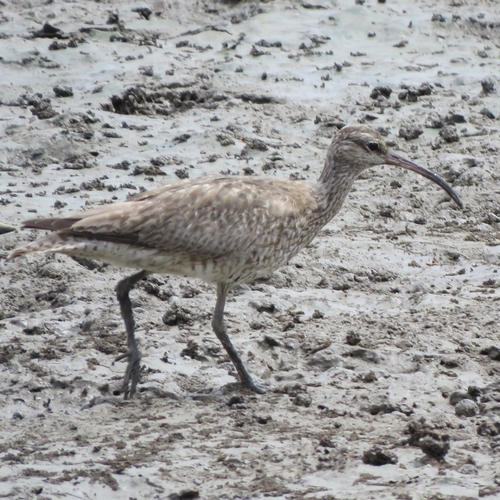
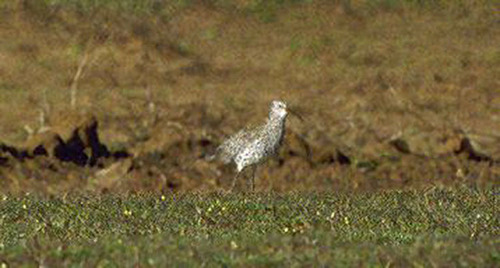
Whimbrel (Numenius phaeopus) Whimbrel
Slender-billed Curlew (Numenius tenuirostris) Slender-billed Curlew

Media

Loading…

In short

The Whimbrel and Slender-billed Curlew are similar in appearance, but the Slender-billed Curlew is paler and lacks the Whimbrel's distinctive dark crown-stripe. The Slender-billed Curlew is critically endangered and extremely rare, making sightings very unlikely.

Identification tips

1. Look for the dark crown-stripe on the Whimbrel, which the Slender-billed Curlew lacks. 2. Note the paler overall appearance of the Slender-billed Curlew. 3. Check for the rounded or heart-shaped dark markings on the breast and flanks of the Slender-billed Curlew. 4. Consider the rarity of the Slender-billed Curlew; a sighting is extremely unlikely.

Size

Both species are similar in size, with the Slender-billed Curlew measuring 36–41 cm in length and having a wingspan of 80–92 cm.

Plumage

The Whimbrel has a distinctive dark crown-stripe, which the Slender-billed Curlew lacks. The Slender-billed Curlew is generally paler with a white or pale buff ground color on the head and breast, and it features rounded or heart-shaped dark markings on the breast and flanks.

Behaviour

Both species feed by probing in soft mud or soil, but the Slender-billed Curlew has been observed taking insects from scrubby bushes.

Habitat

The Slender-billed Curlew's habitat preferences are not well-documented due to its rarity, but it has been observed in wintering grounds in Morocco. Whimbrels are more widespread and can be found in coastal and wetland areas.

Voice

The Slender-billed Curlew's call is similar to the Whimbrel's 'cour-lee' but is higher-pitched, shorter, and more repeated, sometimes followed by a laughing trill of 'ti-ti-ti' notes.

Submit a better description

Use the same sections as the comparison. Your text is published immediately.

The Whimbrel and Slender-billed Curlew are similar in appearance, but the Slender-billed Curlew is paler and lacks the Whimbrel's distinctive dark crown-stripe. The Slender-billed Curlew is critically endangered and extremely rare, making sightings very unlikely.

1. Look for the dark crown-stripe on the Whimbrel, which the Slender-billed Curlew lacks. 2. Note the paler overall appearance of the Slender-billed Curlew. 3. Check for the rounded or heart-shaped dark markings on the breast and flanks of the Slender-billed Curlew. 4. Consider the rarity of the Slender-billed Curlew; a sighting is extremely unlikely.

Both species are similar in size, with the Slender-billed Curlew measuring 36–41 cm in length and having a wingspan of 80–92 cm.

The Whimbrel has a distinctive dark crown-stripe, which the Slender-billed Curlew lacks. The Slender-billed Curlew is generally paler with a white or pale buff ground color on the head and breast, and it features rounded or heart-shaped dark markings on the breast and flanks.

Both species feed by probing in soft mud or soil, but the Slender-billed Curlew has been observed taking insects from scrubby bushes.

The Slender-billed Curlew's habitat preferences are not well-documented due to its rarity, but it has been observed in wintering grounds in Morocco. Whimbrels are more widespread and can be found in coastal and wetland areas.

The Slender-billed Curlew's call is similar to the Whimbrel's 'cour-lee' but is higher-pitched, shorter, and more repeated, sometimes followed by a laughing trill of 'ti-ti-ti' notes.

Discard your changes?

You have unsaved edits. If you leave now, those changes will be lost.

Whimbrel · Slender-billed Curlew · My Tricky Birds