
Birdr

Whiskered Tern vs Arctic Tern

Chlidonias hybrida versus Sterna paradisaea

Play a quiz with Whiskered Tern and Arctic Tern
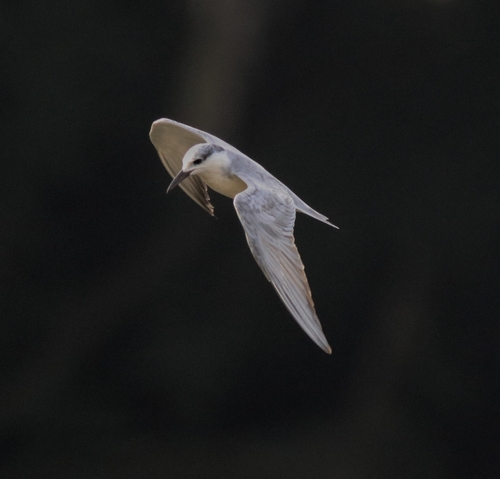
Whiskered Tern (Chlidonias hybrida) Whiskered Tern
Arctic Tern (Sterna paradisaea) Arctic Tern

Media

Loading…

In short

The Arctic Tern (Sterna paradisaea) and the Whiskered Tern (Chlidonias hybrida) can be distinguished by their size, plumage coloration, and tail length. The Arctic Tern is slightly larger with a longer tail, while the Whiskered Tern has darker underparts and a more rounded wing shape. Additionally, their vocalizations and feeding behaviors differ, making field identification easier.

Identification tips

  1. Birds of the World Similar-Species Diagnostics:
  2. The Whiskered Tern is described as “darker below, with much shorter tail” compared to the Arctic Tern. Its upperparts are mid-grey with contrasting underparts that are darker on the belly. The Arctic Tern is larger with a longer, deeply forked tail and a more elegant flight pattern.

  3. AI Field Diagnostics:

  4. Size and Tail: The Arctic Tern is larger and has a longer, forked tail, making it easy to identify in flight. If you observe a smaller tern with a rounded wing and slightly forked tail, it's likely the Whiskered Tern.
  5. Plumage: Look for the stark white underparts and black cap of the Arctic Tern versus the darker, more mottled underparts of the Whiskered Tern. If the tern has a black cap and contrasting white cheeks, it’s probably a Whiskered Tern.
  6. Behavior: If the bird is hovering or dipping over water, it is likely a Whiskered Tern. In contrast, if you observe a tern diving more deeply into the water, it is more likely to be an Arctic Tern.
  7. Vocalization: Pay attention to the calls; the Arctic Tern’s calls are melodious, while the Whiskered Tern's calls are harsher and rasping.

By focusing on these key identification features, birdwatchers can effectively distinguish between the Arctic Tern and the Whiskered Tern in the field.

Size

Plumage

Behaviour

Habitat

Voice

Submit a better description

Use the same sections as the comparison. Your text is published immediately.

The Arctic Tern (Sterna paradisaea) and the Whiskered Tern (Chlidonias hybrida) can be distinguished by their size, plumage coloration, and tail length. The Arctic Tern is slightly larger with a longer tail, while the Whiskered Tern has darker underparts and a more rounded wing shape. Additionally, their vocalizations and feeding behaviors differ, making field identification easier.

  1. Birds of the World Similar-Species Diagnostics:
  2. The Whiskered Tern is described as “darker below, with much shorter tail” compared to the Arctic Tern. Its upperparts are mid-grey with contrasting underparts that are darker on the belly. The Arctic Tern is larger with a longer, deeply forked tail and a more elegant flight pattern.

  3. AI Field Diagnostics:

  4. Size and Tail: The Arctic Tern is larger and has a longer, forked tail, making it easy to identify in flight. If you observe a smaller tern with a rounded wing and slightly forked tail, it's likely the Whiskered Tern.
  5. Plumage: Look for the stark white underparts and black cap of the Arctic Tern versus the darker, more mottled underparts of the Whiskered Tern. If the tern has a black cap and contrasting white cheeks, it’s probably a Whiskered Tern.
  6. Behavior: If the bird is hovering or dipping over water, it is likely a Whiskered Tern. In contrast, if you observe a tern diving more deeply into the water, it is more likely to be an Arctic Tern.
  7. Vocalization: Pay attention to the calls; the Arctic Tern’s calls are melodious, while the Whiskered Tern's calls are harsher and rasping.

By focusing on these key identification features, birdwatchers can effectively distinguish between the Arctic Tern and the Whiskered Tern in the field.

  • Arctic Tern: Measures about 28–36 cm in length with a wingspan of 76–85 cm and weighs 80–120 g.
  • Whiskered Tern: Smaller, measuring 23–29 cm in length, with a wingspan of 64–70 cm, and weighing 60–101 g (mean 84 g). The Whiskered Tern also has a shorter tail with only a slight fork compared to the Arctic Tern's longer, more deeply forked tail.
  • Arctic Tern: Breeding adults have a striking white body, with a black cap on the head and a distinct red bill. The upperparts are grey, and the underparts are white. Juveniles are mottled brown and have a more complex head pattern.
  • Whiskered Tern: Breeding adults display a black crown and contrasting white cheeks, with upperparts that are mid-grey and darker underparts, particularly on the belly. In non-breeding plumage, they appear very pale above and below, with a dark-flecked pale crown. Juveniles have a washed buff face with dark grey tips and darker scapulars.
  • Arctic Tern: Known for its long migratory patterns, the Arctic Tern often forages in open water and is more likely to be seen diving for fish. It has a graceful flight pattern characterized by smooth, deliberate wingbeats.
  • Whiskered Tern: Typically engages in aerial-dipping or hovering while foraging near the water’s surface. It may also hawk insects over fields and is often associated with agricultural areas. Its flight is more fluttery compared to the Arctic Tern.
  • Arctic Tern: Prefers coastal habitats and open ocean, often found nesting on bare ground in colonies on remote islands and coastal areas.
  • Whiskered Tern: Frequently found in freshwater habitats, including marshes, lakes, and wetlands, with a preference for areas with vegetation. They are often seen near agricultural fields.
  • Arctic Tern: The calls are high-pitched and can be described as a series of sharp, musical notes, often used during courtship.
  • Whiskered Tern: Has a harsher vocalization, characterized by a rasping “kyick” or “cherk” for advertising and a “kerch” alarm call, which is more repetitive and harsh compared to the Arctic Tern.

Discard your changes?

You have unsaved edits. If you leave now, those changes will be lost.

Whiskered Tern · Arctic Tern · My Tricky Birds