Birdr

White-backed Mousebird vs Narina Trogon

Colius colius versus Apaloderma narina

Play a quiz with White-backed Mousebird and Narina Trogon
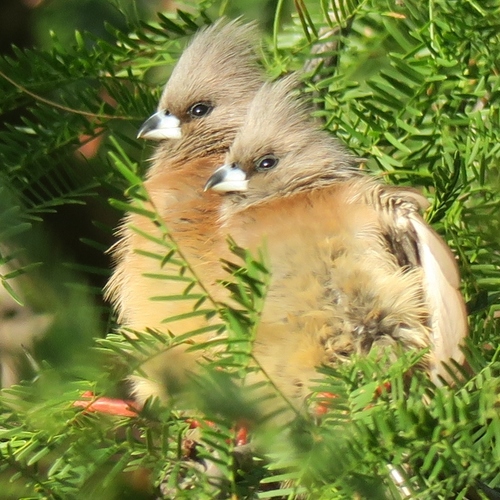
White-backed Mousebird (Colius colius) White-backed Mousebird
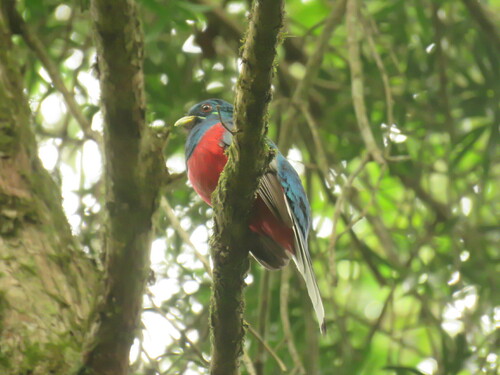
Narina Trogon (Apaloderma narina) Narina Trogon

Media

Loading…

In short

The White-backed Mousebird and Narina Trogon are distinct in both appearance and behavior. The mousebird is a small, slender bird with a long tail and a mostly gray body, while the trogon is larger, with vibrant plumage and a more robust build. Their habitats overlap in some regions, but their differences in plumage and behavior make them distinguishable.

Identification tips

Look for the long tail and white back of the White-backed Mousebird, often seen in flocks. For the Narina Trogon, note the vibrant green and red plumage and its preference for forested habitats. Behaviorally, mousebirds are more active and social, while trogons are solitary and quiet.

Size

The Narina Trogon is larger and more robust compared to the smaller, slender White-backed Mousebird.

Plumage

White-backed Mousebird has a mostly gray body with a distinctive white back and a long, slender tail. In contrast, the Narina Trogon displays vibrant plumage with a green head, red belly, and a purplish uppertail.

Behaviour

White-backed Mousebirds are often seen in small flocks, moving actively through vegetation, while Narina Trogons are more solitary and tend to perch quietly in forested areas.

Habitat

White-backed Mousebirds are found in open woodlands and savannas, while Narina Trogons inhabit a variety of forested environments, including montane rainforests and gallery forests.

Voice

The vocalizations of these species differ significantly; however, specific details on their calls are not provided here.

Submit a better description

Use the same sections as the comparison. Your text is published immediately.

The White-backed Mousebird and Narina Trogon are distinct in both appearance and behavior. The mousebird is a small, slender bird with a long tail and a mostly gray body, while the trogon is larger, with vibrant plumage and a more robust build. Their habitats overlap in some regions, but their differences in plumage and behavior make them distinguishable.

Look for the long tail and white back of the White-backed Mousebird, often seen in flocks. For the Narina Trogon, note the vibrant green and red plumage and its preference for forested habitats. Behaviorally, mousebirds are more active and social, while trogons are solitary and quiet.

The Narina Trogon is larger and more robust compared to the smaller, slender White-backed Mousebird.

White-backed Mousebird has a mostly gray body with a distinctive white back and a long, slender tail. In contrast, the Narina Trogon displays vibrant plumage with a green head, red belly, and a purplish uppertail.

White-backed Mousebirds are often seen in small flocks, moving actively through vegetation, while Narina Trogons are more solitary and tend to perch quietly in forested areas.

White-backed Mousebirds are found in open woodlands and savannas, while Narina Trogons inhabit a variety of forested environments, including montane rainforests and gallery forests.

The vocalizations of these species differ significantly; however, specific details on their calls are not provided here.

Discard your changes?

You have unsaved edits. If you leave now, those changes will be lost.

White-backed Mousebird · Narina Trogon · My Tricky Birds