Birdr

White-backed Vulture vs Bateleur

Gyps africanus versus Terathopius ecaudatus

Play a quiz with White-backed Vulture and Bateleur
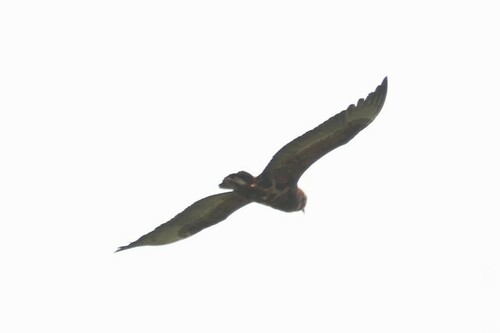
White-backed Vulture (Gyps africanus) White-backed Vulture
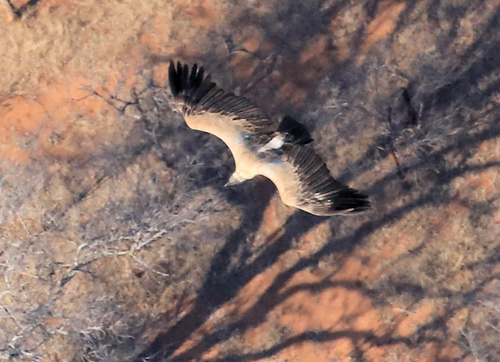
Bateleur (Terathopius ecaudatus) Bateleur

Media

Loading…

In short

The White-backed Vulture and the Bateleur are both large birds of prey found in Africa, but they can be distinguished by their structure and plumage. The White-backed Vulture has a more typical vulture appearance with a long neck and broad wings, while the Bateleur is known for its short tail and distinctive, colorful plumage.

Identification tips

1. Tail Shape: The Bateleur has a very short tail, giving it a unique silhouette compared to the long-tailed White-backed Vulture. 2. Plumage Color: Look for the Bateleur's striking red face and legs against its black and white plumage. 3. Flight Style: Note the Bateleur's low, gliding flight compared to the high soaring of the White-backed Vulture. 4. Location: Check for the presence of large carcasses, which are more likely to attract White-backed Vultures.

Size

The White-backed Vulture is larger and more robust, with a wingspan that can exceed 2 meters, whereas the Bateleur is more compact with a shorter wingspan.

Plumage

The White-backed Vulture has a pale back and dark flight feathers, giving it a contrasting appearance. In contrast, the Bateleur is striking with its black body, white underwing coverts, and bright red face and legs.

Behaviour

White-backed Vultures are often seen soaring high in the sky in search of carrion, while Bateleurs are known for their acrobatic flight and low, gliding hunting style.

Habitat

Both species inhabit open savannas and woodlands, but the White-backed Vulture is more commonly associated with areas near large carcasses, while the Bateleur can be found in a wider range of habitats, including more arid regions.

Voice

Both species are generally silent, but the Bateleur may emit a barking call during displays, whereas the White-backed Vulture is mostly silent, occasionally making hissing sounds.

Submit a better description

Use the same sections as the comparison. Your text is published immediately.

The White-backed Vulture and the Bateleur are both large birds of prey found in Africa, but they can be distinguished by their structure and plumage. The White-backed Vulture has a more typical vulture appearance with a long neck and broad wings, while the Bateleur is known for its short tail and distinctive, colorful plumage.

1. Tail Shape: The Bateleur has a very short tail, giving it a unique silhouette compared to the long-tailed White-backed Vulture. 2. Plumage Color: Look for the Bateleur's striking red face and legs against its black and white plumage. 3. Flight Style: Note the Bateleur's low, gliding flight compared to the high soaring of the White-backed Vulture. 4. Location: Check for the presence of large carcasses, which are more likely to attract White-backed Vultures.

The White-backed Vulture is larger and more robust, with a wingspan that can exceed 2 meters, whereas the Bateleur is more compact with a shorter wingspan.

The White-backed Vulture has a pale back and dark flight feathers, giving it a contrasting appearance. In contrast, the Bateleur is striking with its black body, white underwing coverts, and bright red face and legs.

White-backed Vultures are often seen soaring high in the sky in search of carrion, while Bateleurs are known for their acrobatic flight and low, gliding hunting style.

Both species inhabit open savannas and woodlands, but the White-backed Vulture is more commonly associated with areas near large carcasses, while the Bateleur can be found in a wider range of habitats, including more arid regions.

Both species are generally silent, but the Bateleur may emit a barking call during displays, whereas the White-backed Vulture is mostly silent, occasionally making hissing sounds.

Discard your changes?

You have unsaved edits. If you leave now, those changes will be lost.

White-backed Vulture · Bateleur · My Tricky Birds