Birdr

White-backed Vulture vs Fork-tailed Drongo

Gyps africanus versus Dicrurus adsimilis

Play a quiz with White-backed Vulture and Fork-tailed Drongo
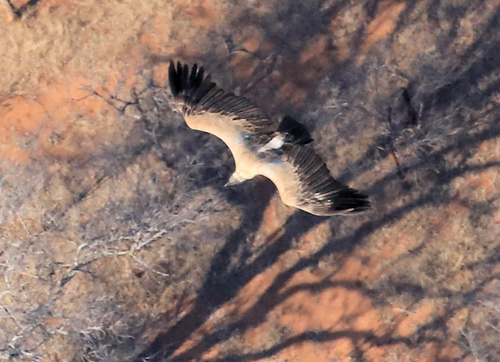
White-backed Vulture (Gyps africanus) White-backed Vulture
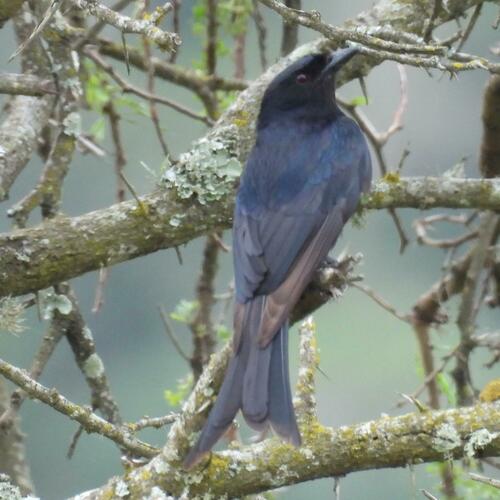
Fork-tailed Drongo (Dicrurus adsimilis) Fork-tailed Drongo

Media

Loading…

In short

The White-backed Vulture and Fork-tailed Drongo are easily distinguished by size and shape: the vulture is a large, broad-winged bird of prey, while the drongo is a much smaller, slender passerine with a distinctive forked tail. Their habitats overlap in some regions, but their behaviors and vocalizations are markedly different.

Identification tips

  1. Size and Shape: Look for the large size and broad wings of the vulture versus the small, sleek body and forked tail of the drongo. 2. Plumage: Note the pale back of the vulture compared to the glossy black of the drongo. 3. Behavior: Observe feeding habits; vultures are at carcasses, drongos are more active and often seen chasing insects. 4. Vocalization: Listen for the drongo's varied calls and mimicry, as vultures are generally silent.

Size

The White-backed Vulture is significantly larger, with a wingspan that can exceed 2 meters, compared to the much smaller Fork-tailed Drongo, which is about the size of a common starling.

Plumage

The vulture has a pale back and underparts with dark flight feathers, while the drongo is uniformly glossy black with a distinctive forked tail.

Behaviour

White-backed Vultures are scavengers, often seen soaring high in the sky or gathered at carcasses. Fork-tailed Drongos are agile fliers, known for their kleptoparasitic behavior and often seen sallying for insects or following large mammals.

Habitat

Both species can be found in savannas and open woodlands, but the vulture is more associated with areas where large mammals are present, while the drongo is more adaptable, also seen in gardens and agricultural areas.

Voice

The Fork-tailed Drongo is vocal, with a variety of harsh calls and mimicry, whereas the White-backed Vulture is mostly silent, occasionally making hissing or grunting sounds.

Submit a better description

Use the same sections as the comparison. Your text is published immediately.

The White-backed Vulture and Fork-tailed Drongo are easily distinguished by size and shape: the vulture is a large, broad-winged bird of prey, while the drongo is a much smaller, slender passerine with a distinctive forked tail. Their habitats overlap in some regions, but their behaviors and vocalizations are markedly different.

  1. Size and Shape: Look for the large size and broad wings of the vulture versus the small, sleek body and forked tail of the drongo. 2. Plumage: Note the pale back of the vulture compared to the glossy black of the drongo. 3. Behavior: Observe feeding habits; vultures are at carcasses, drongos are more active and often seen chasing insects. 4. Vocalization: Listen for the drongo's varied calls and mimicry, as vultures are generally silent.

The White-backed Vulture is significantly larger, with a wingspan that can exceed 2 meters, compared to the much smaller Fork-tailed Drongo, which is about the size of a common starling.

The vulture has a pale back and underparts with dark flight feathers, while the drongo is uniformly glossy black with a distinctive forked tail.

White-backed Vultures are scavengers, often seen soaring high in the sky or gathered at carcasses. Fork-tailed Drongos are agile fliers, known for their kleptoparasitic behavior and often seen sallying for insects or following large mammals.

Both species can be found in savannas and open woodlands, but the vulture is more associated with areas where large mammals are present, while the drongo is more adaptable, also seen in gardens and agricultural areas.

The Fork-tailed Drongo is vocal, with a variety of harsh calls and mimicry, whereas the White-backed Vulture is mostly silent, occasionally making hissing or grunting sounds.

Discard your changes?

You have unsaved edits. If you leave now, those changes will be lost.

White-backed Vulture · Fork-tailed Drongo · My Tricky Birds