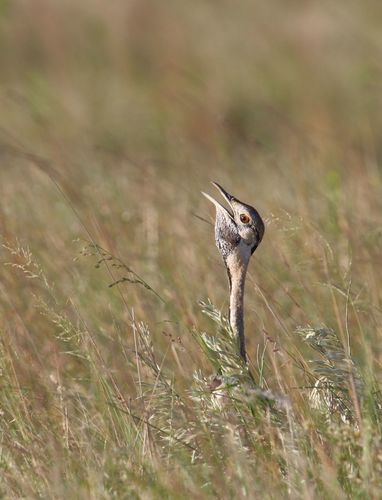
White-bellied Bustard vs Black-bellied Bustard
Eupodotis senegalensis versus Lissotis melanogaster
Play a quiz with White-bellied Bustard and Black-bellied Bustard
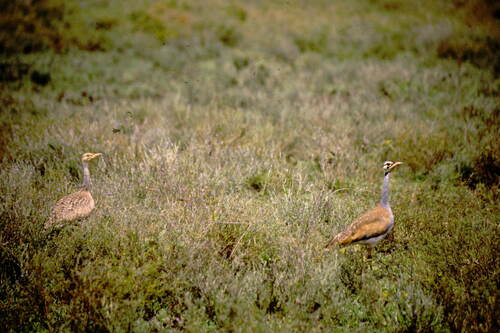
White-bellied Bustard
Black-bellied Bustard
In short
The White-bellied Bustard and Black-bellied Bustard are similar in size and structure, but can be distinguished by their belly coloration and vocalizations. The White-bellied Bustard has a pale belly, while the Black-bellied Bustard has a distinctive dark belly. Both species inhabit open grasslands but may differ slightly in preferred environments.
Identification tips
- Belly Color: Look for the belly color; white in White-bellied, black in Black-bellied. 2. Vocalizations: Listen for the distinct calls; whistles for White-bellied, booming for Black-bellied. 3. Habitat: Consider the habitat; slightly drier for White-bellied. 4. Overall Plumage: Note the similar mottled brown and buff upperparts.
Size
Both species are similar in size, typical of medium-sized bustards.
Plumage
The most reliable difference is the belly color: the White-bellied Bustard has a pale or white belly, whereas the Black-bellied Bustard has a black or dark belly. Both species have similar overall coloration with mottled brown and buff upperparts.
Behaviour
Both species exhibit similar bustard behaviors, such as ground foraging and displaying during breeding season.
Habitat
Both species prefer open grasslands, but the White-bellied Bustard may be found in slightly drier areas compared to the Black-bellied Bustard.
Voice
The vocalizations differ, with the White-bellied Bustard having a series of whistles, while the Black-bellied Bustard's call is more of a booming sound. Listening for these calls can aid in identification.
White-bellied Bustard · Black-bellied Bustard · My Tricky Birds