Birdr

White-bellied Erpornis vs Mangrove Whistler

Erpornis zantholeuca versus Pachycephala cinerea

Play a quiz with White-bellied Erpornis and Mangrove Whistler
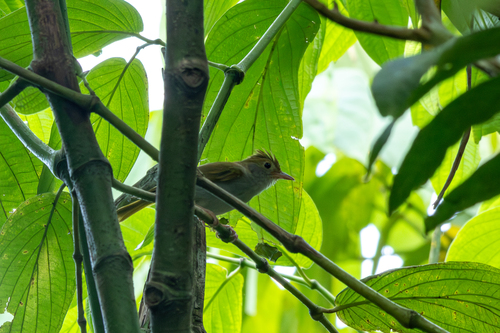
White-bellied Erpornis (Erpornis zantholeuca) White-bellied Erpornis
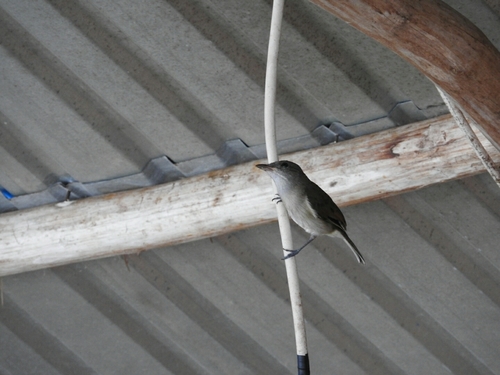
Mangrove Whistler (Pachycephala cinerea) Mangrove Whistler

Media

Loading…

In short

The Mangrove Whistler (Pachycephala cinerea cinerea) and the White-bellied Erpornis (Erpornis zantholeuca zantholeuca) are two distinct bird species that can be differentiated by size, plumage coloration, vocalizations, and habitat preferences. While the Mangrove Whistler is typically found in mangrove forests and has a more subdued coloration with a prominent yellow underbelly, the White-bellied Erpornis features striking black and white plumage and prefers forested habitats.

Identification tips

  1. Birds of the World Similar-Species Diagnostics:
  2. The Mangrove Whistler is distinguished by "a yellow underbelly and olive-brown upperparts," while the White-bellied Erpornis is noted for its "contrasting black and white plumage" (source: Birds of the World).

  3. AI Field Diagnostics:

  4. Size and Shape: Pay attention to size; the Mangrove Whistler is somewhat smaller than the White-bellied Erpornis. The whistler has a more rounded body, while the Erpornis has a sleeker profile.
  5. Plumage Patterns: The stark contrast in plumage is a major field-identifiable difference. Look for the all-black upper parts of the Erpornis compared to the more muted olive tones of the whistler. The bright yellow of the Mangrove Whistler’s underparts is also a key identifying feature.
  6. Behavioral Cues: Observe their foraging behavior; the Mangrove Whistler is more likely to be found on the ground or in dense cover, while the White-bellied Erpornis may be seen in the canopy, moving quickly between branches.
  7. Vocalizations: Listen for the differences in their calls; the melodious whistles of the Mangrove Whistler can be distinguished from the chattering notes of the White-bellied Erpornis.

By focusing on these characteristics, birdwatchers can confidently identify and distinguish between the Mangrove Whistler and the White-bellied Erpornis in the field.

Size

Plumage

Behaviour

Habitat

Voice

Submit a better description

Use the same sections as the comparison. Your text is published immediately.

The Mangrove Whistler (Pachycephala cinerea cinerea) and the White-bellied Erpornis (Erpornis zantholeuca zantholeuca) are two distinct bird species that can be differentiated by size, plumage coloration, vocalizations, and habitat preferences. While the Mangrove Whistler is typically found in mangrove forests and has a more subdued coloration with a prominent yellow underbelly, the White-bellied Erpornis features striking black and white plumage and prefers forested habitats.

  1. Birds of the World Similar-Species Diagnostics:
  2. The Mangrove Whistler is distinguished by "a yellow underbelly and olive-brown upperparts," while the White-bellied Erpornis is noted for its "contrasting black and white plumage" (source: Birds of the World).

  3. AI Field Diagnostics:

  4. Size and Shape: Pay attention to size; the Mangrove Whistler is somewhat smaller than the White-bellied Erpornis. The whistler has a more rounded body, while the Erpornis has a sleeker profile.
  5. Plumage Patterns: The stark contrast in plumage is a major field-identifiable difference. Look for the all-black upper parts of the Erpornis compared to the more muted olive tones of the whistler. The bright yellow of the Mangrove Whistler’s underparts is also a key identifying feature.
  6. Behavioral Cues: Observe their foraging behavior; the Mangrove Whistler is more likely to be found on the ground or in dense cover, while the White-bellied Erpornis may be seen in the canopy, moving quickly between branches.
  7. Vocalizations: Listen for the differences in their calls; the melodious whistles of the Mangrove Whistler can be distinguished from the chattering notes of the White-bellied Erpornis.

By focusing on these characteristics, birdwatchers can confidently identify and distinguish between the Mangrove Whistler and the White-bellied Erpornis in the field.

  • Mangrove Whistler: This species typically measures around 16 to 18 cm in length, presenting a medium-sized profile common among whistlers.
  • White-bellied Erpornis: Slightly larger, the Erpornis measures about 18 to 20 cm in length.
  • Mangrove Whistler: The plumage is generally olive-brown on the upper parts with a bright yellow underbelly. Its wings are darker, and there are subtle markings on the face.
  • White-bellied Erpornis: This bird displays a striking black crown, back, and wings, with a pure white belly and underparts, providing a stark contrast that is visually distinctive.
  • Mangrove Whistler: Known for its solitary behavior, it often forages low in the underbrush or on the ground, and is less likely to be seen in open spaces.
  • White-bellied Erpornis: This species tends to be more social and may be observed foraging in pairs or small groups, often flitting through the mid to upper canopy of forests.
  • Mangrove Whistler: As the name suggests, it prefers mangrove habitats along coastal areas, often found in dense thickets or shrubby areas near water.
  • White-bellied Erpornis: It inhabits moist tropical forests and secondary growth, generally avoiding the coastal mangrove environments that the whistler prefers.
  • Mangrove Whistler: The vocalizations typically consist of melodious whistles and clear notes, which are used for communication, especially during mating season.
  • White-bellied Erpornis: It produces a series of rapid, high-pitched notes that are less melodious than the whistler’s and can often be heard as a chatter while foraging.

Discard your changes?

You have unsaved edits. If you leave now, those changes will be lost.

White-bellied Erpornis · Mangrove Whistler · My Tricky Birds