Birdr

White-breasted Woodswallow vs Bar-winged Flycatcher-shrike

Artamus leucorynchus versus Hemipus picatus

Play a quiz with White-breasted Woodswallow and Bar-winged Flycatcher-shrike
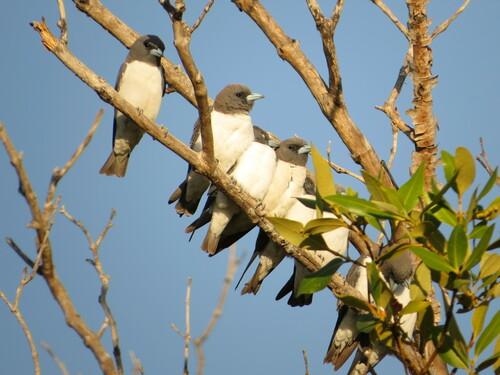
White-breasted Woodswallow (Artamus leucorynchus) White-breasted Woodswallow
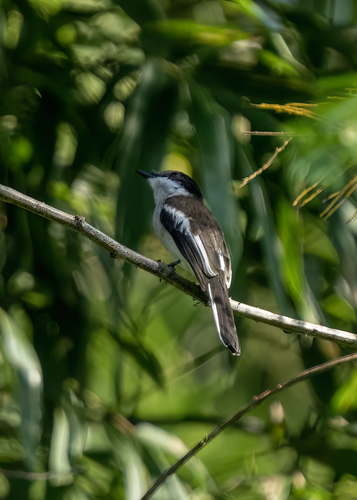
Bar-winged Flycatcher-shrike (Hemipus picatus) Bar-winged Flycatcher-shrike

Media

Loading…

In short

The White-breasted Woodswallow and the Bar-winged Flycatcher-shrike can be distinguished by their size and plumage. The Woodswallow is generally larger and has a distinctive white breast, while the Flycatcher-shrike features prominent wing bars. Both species occupy similar habitats but have different vocalizations.

Identification tips

Look for the white breast and larger size of the Woodswallow. Note the white wing bars and smaller size of the Flycatcher-shrike. Listen for the Woodswallow's chattering calls versus the Flycatcher-shrike's whistles. Consider habitat: the Flycatcher-shrike prefers denser forest environments.

Size

The White-breasted Woodswallow is larger and more robust compared to the smaller, more slender Bar-winged Flycatcher-shrike.

Plumage

The Woodswallow has a white breast and dark gray upperparts, whereas the Flycatcher-shrike is characterized by its black and white plumage with distinct white wing bars.

Behaviour

The Woodswallow often perches conspicuously and may be seen in flocks, while the Flycatcher-shrike is more solitary or found in pairs, often actively foraging in the canopy.

Habitat

Both species can be found in open woodlands and forest edges, but the Flycatcher-shrike is more likely to be seen in dense forests.

Voice

The Woodswallow has a soft, chattering call, while the Flycatcher-shrike produces a series of high-pitched whistles.

Submit a better description

Use the same sections as the comparison. Your text is published immediately.

The White-breasted Woodswallow and the Bar-winged Flycatcher-shrike can be distinguished by their size and plumage. The Woodswallow is generally larger and has a distinctive white breast, while the Flycatcher-shrike features prominent wing bars. Both species occupy similar habitats but have different vocalizations.

Look for the white breast and larger size of the Woodswallow. Note the white wing bars and smaller size of the Flycatcher-shrike. Listen for the Woodswallow's chattering calls versus the Flycatcher-shrike's whistles. Consider habitat: the Flycatcher-shrike prefers denser forest environments.

The White-breasted Woodswallow is larger and more robust compared to the smaller, more slender Bar-winged Flycatcher-shrike.

The Woodswallow has a white breast and dark gray upperparts, whereas the Flycatcher-shrike is characterized by its black and white plumage with distinct white wing bars.

The Woodswallow often perches conspicuously and may be seen in flocks, while the Flycatcher-shrike is more solitary or found in pairs, often actively foraging in the canopy.

Both species can be found in open woodlands and forest edges, but the Flycatcher-shrike is more likely to be seen in dense forests.

The Woodswallow has a soft, chattering call, while the Flycatcher-shrike produces a series of high-pitched whistles.

Discard your changes?

You have unsaved edits. If you leave now, those changes will be lost.

White-breasted Woodswallow · Bar-winged Flycatcher-shrike · My Tricky Birds