
Birdr

White-browed Shrike-Babbler vs Clicking Shrike-Babbler

Pteruthius aeralatus versus Pteruthius intermedius

Play a quiz with White-browed Shrike-Babbler and Clicking Shrike-Babbler
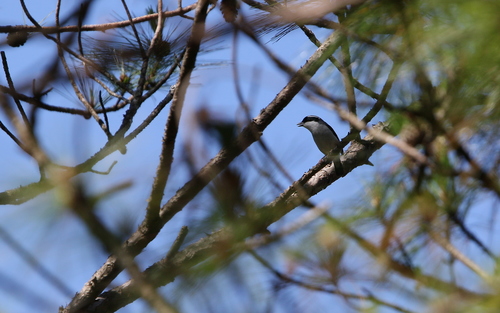
White-browed Shrike-Babbler (Pteruthius aeralatus) White-browed Shrike-Babbler
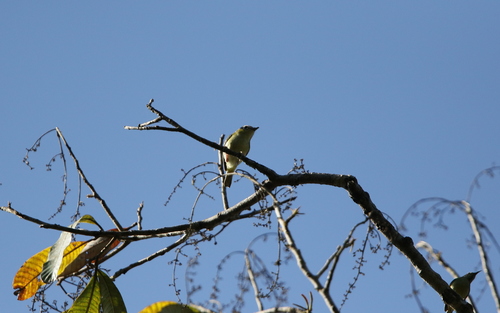
Clicking Shrike-Babbler (Pteruthius intermedius) Clicking Shrike-Babbler

Media

Loading…

In short

The White-browed Shrike-Babbler and Clicking Shrike-Babbler are similar in structure but differ in plumage and vocalizations. The White-browed has a more muted appearance with gray tones, while the Clicking is more vibrant with chestnut and yellow. Both species are often found in mixed-species flocks in the canopy.

Identification tips

  1. Look for the chestnut and yellow plumage of the Clicking Shrike-Babbler, especially the chestnut forehead and throat. 2. Note the gray and olive tones in the White-browed Shrike-Babbler. 3. Listen for the Clicking Shrike-Babbler's distinctive clicking calls. 4. Observe behavior in mixed-species flocks; both species are canopy dwellers.

Size

Both species are similar in size, typical of shrike-babblers, with no significant differences in structure.

Plumage

The White-browed Shrike-Babbler has gray and olive-green tones with a less pronounced supercilium. In contrast, the Clicking Shrike-Babbler features a broad chestnut-brown forehead, throat, and upper breast, with a silver-gray eyestripe and yellow underparts. Females of both species are less distinctive but follow similar patterns.

Behaviour

Both species forage high in the canopy and are often seen in mixed-species flocks, moving methodically through the trees.

Habitat

Both species prefer montane and submontane forests and are found in overlapping geographic ranges, though the Clicking Shrike-Babbler is more widespread.

Voice

The Clicking Shrike-Babbler is known for its series of well-separated clicks, which are readily heard. The White-browed Shrike-Babbler's vocalizations are less distinct and not as well documented.

Submit a better description

Use the same sections as the comparison. Your text is published immediately.

The White-browed Shrike-Babbler and Clicking Shrike-Babbler are similar in structure but differ in plumage and vocalizations. The White-browed has a more muted appearance with gray tones, while the Clicking is more vibrant with chestnut and yellow. Both species are often found in mixed-species flocks in the canopy.

  1. Look for the chestnut and yellow plumage of the Clicking Shrike-Babbler, especially the chestnut forehead and throat. 2. Note the gray and olive tones in the White-browed Shrike-Babbler. 3. Listen for the Clicking Shrike-Babbler's distinctive clicking calls. 4. Observe behavior in mixed-species flocks; both species are canopy dwellers.

Both species are similar in size, typical of shrike-babblers, with no significant differences in structure.

The White-browed Shrike-Babbler has gray and olive-green tones with a less pronounced supercilium. In contrast, the Clicking Shrike-Babbler features a broad chestnut-brown forehead, throat, and upper breast, with a silver-gray eyestripe and yellow underparts. Females of both species are less distinctive but follow similar patterns.

Both species forage high in the canopy and are often seen in mixed-species flocks, moving methodically through the trees.

Both species prefer montane and submontane forests and are found in overlapping geographic ranges, though the Clicking Shrike-Babbler is more widespread.

The Clicking Shrike-Babbler is known for its series of well-separated clicks, which are readily heard. The White-browed Shrike-Babbler's vocalizations are less distinct and not as well documented.

Discard your changes?

You have unsaved edits. If you leave now, those changes will be lost.

White-browed Shrike-Babbler · Clicking Shrike-Babbler · My Tricky Birds