Birdr

White-capped Bunting vs Grey-necked Bunting

Emberiza stewarti versus Emberiza buchanani

Play a quiz with White-capped Bunting and Grey-necked Bunting
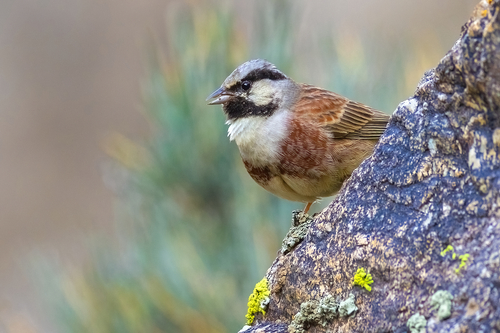
White-capped Bunting (Emberiza stewarti) White-capped Bunting
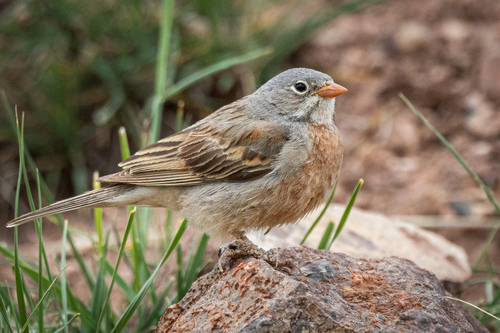
Grey-necked Bunting (Emberiza buchanani) Grey-necked Bunting

Media

Loading…

In short

The White-capped Bunting and Grey-necked Bunting are similar in structure but can be distinguished by their head markings and plumage tones. The White-capped Bunting has a distinctive white crown, while the Grey-necked Bunting features a greyish neck and more uniform body coloration.

Identification tips

  1. Look for the white crown on the White-capped Bunting, especially in good light. 2. Note the greyish neck of the Grey-necked Bunting, which can be more apparent in certain lighting conditions. 3. Observe the overall plumage tone; the White-capped Bunting has more contrast between the head and body, while the Grey-necked is more uniform. 4. Consider habitat context, as the Grey-necked Bunting may be found in more arid environments.

Size

Both species are similar in size, typical of Old World Buntings, with no significant differences in overall body length or wingspan.

Plumage

The White-capped Bunting is characterized by its white crown and contrasting dark eye stripe, while the Grey-necked Bunting has a greyish neck and more uniform plumage across the body, lacking the stark contrast seen in the White-capped.

Behaviour

Both species exhibit similar foraging behaviors typical of buntings, often seen on the ground or in low vegetation.

Habitat

Both species inhabit open, dry areas but may vary slightly in preference for specific vegetation types. The Grey-necked Bunting is often found in more arid regions.

Voice

Vocalizations are not a primary distinguishing feature between these two species, as both have similar calls typical of the Emberiza genus.

Submit a better description

Use the same sections as the comparison. Your text is published immediately.

The White-capped Bunting and Grey-necked Bunting are similar in structure but can be distinguished by their head markings and plumage tones. The White-capped Bunting has a distinctive white crown, while the Grey-necked Bunting features a greyish neck and more uniform body coloration.

  1. Look for the white crown on the White-capped Bunting, especially in good light. 2. Note the greyish neck of the Grey-necked Bunting, which can be more apparent in certain lighting conditions. 3. Observe the overall plumage tone; the White-capped Bunting has more contrast between the head and body, while the Grey-necked is more uniform. 4. Consider habitat context, as the Grey-necked Bunting may be found in more arid environments.

Both species are similar in size, typical of Old World Buntings, with no significant differences in overall body length or wingspan.

The White-capped Bunting is characterized by its white crown and contrasting dark eye stripe, while the Grey-necked Bunting has a greyish neck and more uniform plumage across the body, lacking the stark contrast seen in the White-capped.

Both species exhibit similar foraging behaviors typical of buntings, often seen on the ground or in low vegetation.

Both species inhabit open, dry areas but may vary slightly in preference for specific vegetation types. The Grey-necked Bunting is often found in more arid regions.

Vocalizations are not a primary distinguishing feature between these two species, as both have similar calls typical of the Emberiza genus.

Discard your changes?

You have unsaved edits. If you leave now, those changes will be lost.

White-capped Bunting · Grey-necked Bunting · My Tricky Birds