Birdr

White-cheeked Partridge vs Western Tragopan

Arborophila atrogularis versus Tragopan melanocephalus

Play a quiz with White-cheeked Partridge and Western Tragopan
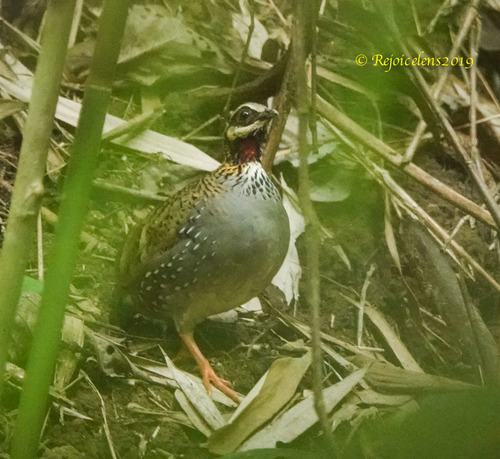
White-cheeked Partridge (Arborophila atrogularis) White-cheeked Partridge
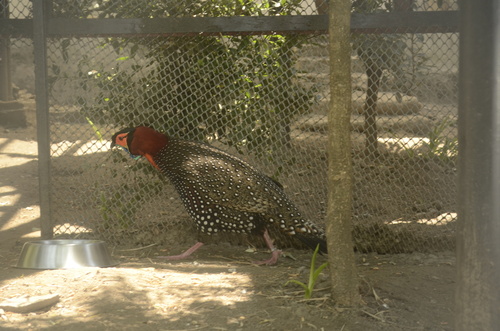
Western Tragopan (Tragopan melanocephalus) Western Tragopan

Media

Loading…

In short

The White-cheeked Partridge and the Western Tragopan are both ground-dwelling birds in the Phasianidae family, but they differ significantly in size and plumage. The partridge is much smaller and has distinct white cheeks, while the tragopan is larger with strikingly colorful plumage and a prominent black head.

Identification tips

  1. Size: The Western Tragopan is much larger than the White-cheeked Partridge. 2. Plumage: Look for the white cheeks and dark throat on the partridge versus the colorful plumage and black head of the tragopan. 3. Habitat: Consider the elevation and forest type; tragopans are found at higher elevations. 4. Behavior: Tragopans may be seen in trees, unlike the more ground-bound partridge. 5. Vocalization: Listen for the distinct calls; tragopans have a louder, more resonant call.

Size

The White-cheeked Partridge is significantly smaller than the Western Tragopan.

Plumage

The White-cheeked Partridge has a more subdued plumage with notable white cheeks and a dark throat. In contrast, the Western Tragopan is larger and more colorful, with a black head and vibrant red and orange markings.

Behaviour

Both species are ground-dwelling, but the Western Tragopan is more likely to be seen in trees or on elevated perches compared to the more terrestrial White-cheeked Partridge.

Habitat

The White-cheeked Partridge is typically found in dense forest undergrowth, while the Western Tragopan prefers higher elevation forests and can be found in more open areas within its range.

Voice

The vocalizations of these species differ, with the White-cheeked Partridge having a series of whistling notes, while the Western Tragopan produces a loud, resonant call.

Submit a better description

Use the same sections as the comparison. Your text is published immediately.

The White-cheeked Partridge and the Western Tragopan are both ground-dwelling birds in the Phasianidae family, but they differ significantly in size and plumage. The partridge is much smaller and has distinct white cheeks, while the tragopan is larger with strikingly colorful plumage and a prominent black head.

  1. Size: The Western Tragopan is much larger than the White-cheeked Partridge. 2. Plumage: Look for the white cheeks and dark throat on the partridge versus the colorful plumage and black head of the tragopan. 3. Habitat: Consider the elevation and forest type; tragopans are found at higher elevations. 4. Behavior: Tragopans may be seen in trees, unlike the more ground-bound partridge. 5. Vocalization: Listen for the distinct calls; tragopans have a louder, more resonant call.

The White-cheeked Partridge is significantly smaller than the Western Tragopan.

The White-cheeked Partridge has a more subdued plumage with notable white cheeks and a dark throat. In contrast, the Western Tragopan is larger and more colorful, with a black head and vibrant red and orange markings.

Both species are ground-dwelling, but the Western Tragopan is more likely to be seen in trees or on elevated perches compared to the more terrestrial White-cheeked Partridge.

The White-cheeked Partridge is typically found in dense forest undergrowth, while the Western Tragopan prefers higher elevation forests and can be found in more open areas within its range.

The vocalizations of these species differ, with the White-cheeked Partridge having a series of whistling notes, while the Western Tragopan produces a loud, resonant call.

Discard your changes?

You have unsaved edits. If you leave now, those changes will be lost.

White-cheeked Partridge · Western Tragopan · My Tricky Birds