Birdr

White-crested Helmetshrike vs Fan-tailed Widowbird

Prionops plumatus versus Euplectes axillaris

Play a quiz with White-crested Helmetshrike and Fan-tailed Widowbird
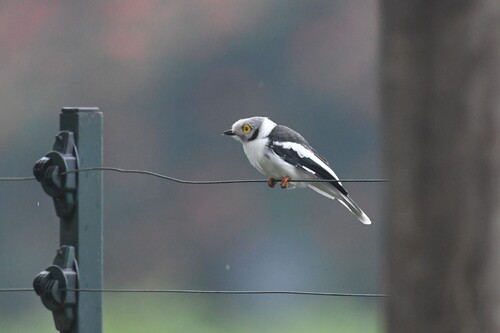
White-crested Helmetshrike (Prionops plumatus) White-crested Helmetshrike
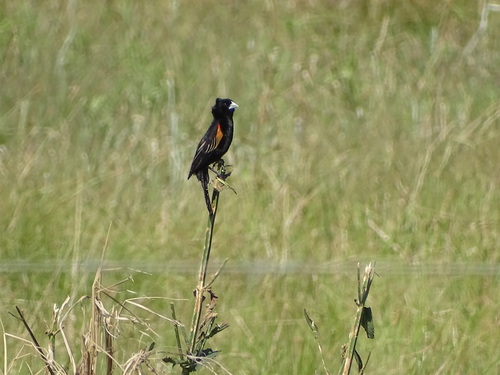
Fan-tailed Widowbird (Euplectes axillaris) Fan-tailed Widowbird

Media

Loading…

In short

The White-crested Helmetshrike and Fan-tailed Widowbird are distinct in appearance and behavior. The Helmetshrike is notable for its striking white crest and social behavior, while the Widowbird is recognized for its long tail and solitary nature, especially in males during breeding season.

Identification tips

Look for the white crest and group behavior for Helmetshrikes. For Widowbirds, focus on the long tail in breeding males and their preference for open grassland habitats. Non-breeding Widowbirds may be trickier, so consider habitat and solitary behavior.

Size

The White-crested Helmetshrike is smaller and more compact compared to the larger and more elongated Fan-tailed Widowbird.

Plumage

The Helmetshrike has a prominent white crest and black and white plumage, while the Widowbird is mostly black with a distinctive long tail in breeding males. Non-breeding Widowbirds and females are more subdued in color, often brownish.

Behaviour

Helmetshrikes are social, often seen in groups, while Widowbirds are more solitary, especially males during the breeding season when they display their long tails.

Habitat

Helmetshrikes are typically found in woodlands and savannas, whereas Widowbirds prefer grasslands and wetlands.

Voice

The vocalizations of the two species differ, with Helmetshrikes having a variety of calls used in social interactions, while Widowbirds have simpler calls often associated with display flights.

Submit a better description

Use the same sections as the comparison. Your text is published immediately.

The White-crested Helmetshrike and Fan-tailed Widowbird are distinct in appearance and behavior. The Helmetshrike is notable for its striking white crest and social behavior, while the Widowbird is recognized for its long tail and solitary nature, especially in males during breeding season.

Look for the white crest and group behavior for Helmetshrikes. For Widowbirds, focus on the long tail in breeding males and their preference for open grassland habitats. Non-breeding Widowbirds may be trickier, so consider habitat and solitary behavior.

The White-crested Helmetshrike is smaller and more compact compared to the larger and more elongated Fan-tailed Widowbird.

The Helmetshrike has a prominent white crest and black and white plumage, while the Widowbird is mostly black with a distinctive long tail in breeding males. Non-breeding Widowbirds and females are more subdued in color, often brownish.

Helmetshrikes are social, often seen in groups, while Widowbirds are more solitary, especially males during the breeding season when they display their long tails.

Helmetshrikes are typically found in woodlands and savannas, whereas Widowbirds prefer grasslands and wetlands.

The vocalizations of the two species differ, with Helmetshrikes having a variety of calls used in social interactions, while Widowbirds have simpler calls often associated with display flights.

Discard your changes?

You have unsaved edits. If you leave now, those changes will be lost.

White-crested Helmetshrike · Fan-tailed Widowbird · My Tricky Birds