Birdr

White-crowned Forktail vs Black-backed Forktail

Enicurus leschenaulti versus Enicurus immaculatus

Play a quiz with White-crowned Forktail and Black-backed Forktail
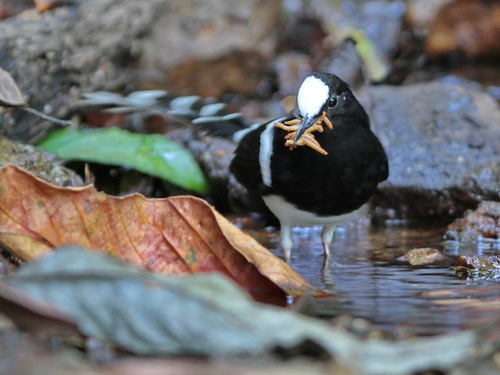
White-crowned Forktail (Enicurus leschenaulti) White-crowned Forktail
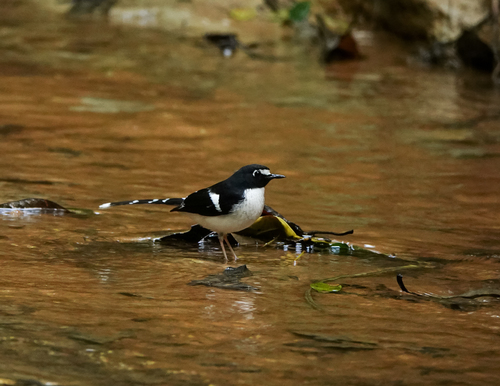
Black-backed Forktail (Enicurus immaculatus) Black-backed Forktail

Media

Loading…

In short

The White-crowned Forktail and Black-backed Forktail are similar in shape and size, but differ in plumage and habitat preferences. The White-crowned Forktail has a distinctive white crown and more extensive white on the tail, while the Black-backed Forktail has a black back and less white on the tail.

Identification tips

Look for the white crown on the White-crowned Forktail, which is absent in the Black-backed Forktail. Check the tail pattern: more white on the White-crowned Forktail. Observe habitat: forested areas suggest White-crowned, while rocky streams suggest Black-backed.

Size

Both species are similar in size, typical of forktails, with a slender body and long tail.

Plumage

The White-crowned Forktail features a prominent white crown and a black back with more extensive white on the tail. In contrast, the Black-backed Forktail has a black back and less white on the tail, lacking the white crown.

Behaviour

Both species exhibit similar behavior, often seen near streams and rivers, foraging for insects.

Habitat

The White-crowned Forktail is often found in forested areas near water, while the Black-backed Forktail prefers more open, rocky streams.

Voice

Vocalizations are not a primary distinguishing feature between these species, and both have similar calls typical of forktails.

Submit a better description

Use the same sections as the comparison. Your text is published immediately.

The White-crowned Forktail and Black-backed Forktail are similar in shape and size, but differ in plumage and habitat preferences. The White-crowned Forktail has a distinctive white crown and more extensive white on the tail, while the Black-backed Forktail has a black back and less white on the tail.

Look for the white crown on the White-crowned Forktail, which is absent in the Black-backed Forktail. Check the tail pattern: more white on the White-crowned Forktail. Observe habitat: forested areas suggest White-crowned, while rocky streams suggest Black-backed.

Both species are similar in size, typical of forktails, with a slender body and long tail.

The White-crowned Forktail features a prominent white crown and a black back with more extensive white on the tail. In contrast, the Black-backed Forktail has a black back and less white on the tail, lacking the white crown.

Both species exhibit similar behavior, often seen near streams and rivers, foraging for insects.

The White-crowned Forktail is often found in forested areas near water, while the Black-backed Forktail prefers more open, rocky streams.

Vocalizations are not a primary distinguishing feature between these species, and both have similar calls typical of forktails.

Discard your changes?

You have unsaved edits. If you leave now, those changes will be lost.

White-crowned Forktail · Black-backed Forktail · My Tricky Birds