White-faced Whistling-Duck vs African Pygmy-Goose
Dendrocygna viduata versus Nettapus auritus
Play a quiz with White-faced Whistling-Duck and African Pygmy-Goose
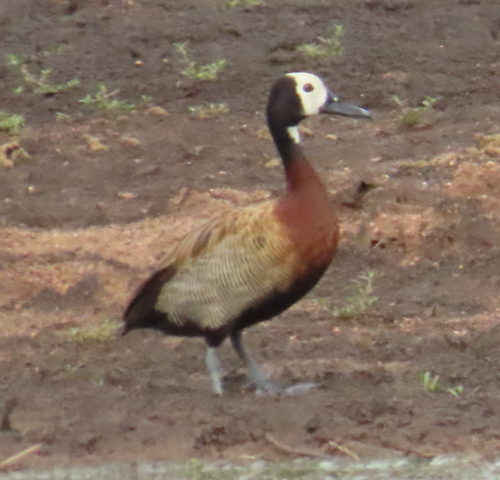
White-faced Whistling-Duck
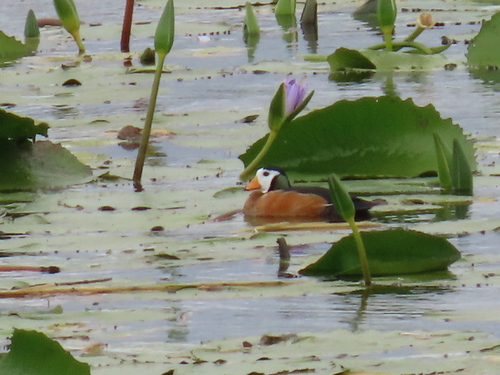
African Pygmy-Goose
In short
The White-faced Whistling-Duck and African Pygmy-Goose are both waterfowl but differ significantly in appearance and behavior. The White-faced Whistling-Duck is larger with a distinctive white face and a long neck, while the African Pygmy-Goose is smaller, with a short neck and a strikingly colorful plumage.
Identification tips
Look for the white face and long neck of the White-faced Whistling-Duck, especially in large flocks. For the African Pygmy-Goose, note the vibrant green back and orange and black bill. Consider habitat: open wetlands for the duck, vegetated ponds for the goose.
Size
The White-faced Whistling-Duck is noticeably larger and more elongated than the compact and small African Pygmy-Goose.
Plumage
White-faced Whistling-Ducks have a white face, dark crown, and chestnut body, whereas African Pygmy-Geese display a vibrant green back, white face with a dark eye patch, and a striking orange and black bill.
Behaviour
White-faced Whistling-Ducks are often seen in large flocks and are more terrestrial, while African Pygmy-Geese are usually found in pairs or small groups and are more aquatic, often seen swimming.
Habitat
White-faced Whistling-Ducks prefer open wetlands and flooded grasslands, whereas African Pygmy-Geese are typically found in well-vegetated, calm water bodies like lagoons and ponds.
Voice
White-faced Whistling-Ducks produce a distinctive whistling call, while African Pygmy-Geese are generally quieter, with soft, high-pitched calls.
White-faced Whistling-Duck · African Pygmy-Goose · My Tricky Birds