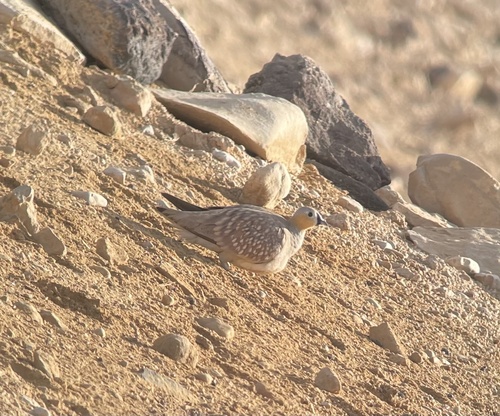
White-faced Whistling-Duck vs Crowned Sandgrouse
Dendrocygna viduata versus Pterocles coronatus
Play a quiz with White-faced Whistling-Duck and Crowned Sandgrouse
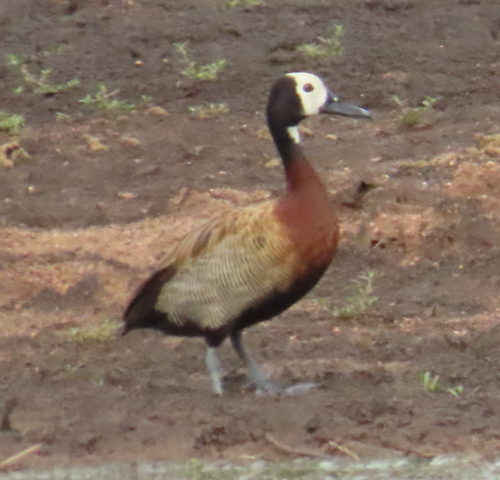
White-faced Whistling-Duck
Crowned Sandgrouse
In short
The White-faced Whistling-Duck and the Crowned Sandgrouse are distinctly different in appearance and habitat. The duck is a waterfowl with a striking white face and chestnut body, while the sandgrouse is a terrestrial bird with a more cryptic, sandy coloration. Observing their habitat and behavior can quickly help differentiate these species.
Identification tips
- Habitat: Check the environment; ducks are in wetlands, sandgrouse in arid areas. 2. Plumage: Look for the white face and chestnut body of the duck versus the sandy, cryptic plumage of the sandgrouse. 3. Behavior: Observe if the bird is swimming or walking; ducks swim, sandgrouse walk. 4. Size: Note the size; ducks are generally larger.
Size
The White-faced Whistling-Duck is generally larger and more robust than the Crowned Sandgrouse.
Plumage
The White-faced Whistling-Duck has a distinctive white face and a chestnut body with a black neck. In contrast, the Crowned Sandgrouse has a sandy, cryptic plumage with a crown pattern on its head, aiding in camouflage.
Behaviour
White-faced Whistling-Ducks are often seen in flocks on water bodies, swimming and diving. Crowned Sandgrouse are more likely to be seen walking on the ground in arid regions, often in pairs or small groups.
Habitat
White-faced Whistling-Ducks are found in wetlands and open water habitats, while Crowned Sandgrouse inhabit arid and semi-arid environments, such as deserts and dry grasslands.
Voice
White-faced Whistling-Ducks are known for their distinctive whistling calls. Crowned Sandgrouse have different vocalizations, often softer and more subtle, suited to their open, arid habitats.
White-faced Whistling-Duck · Crowned Sandgrouse · My Tricky Birds